
5 Common Mistakes Parents Make When Choosing a Dummy (And How to Fix Them)
September 10, 2026
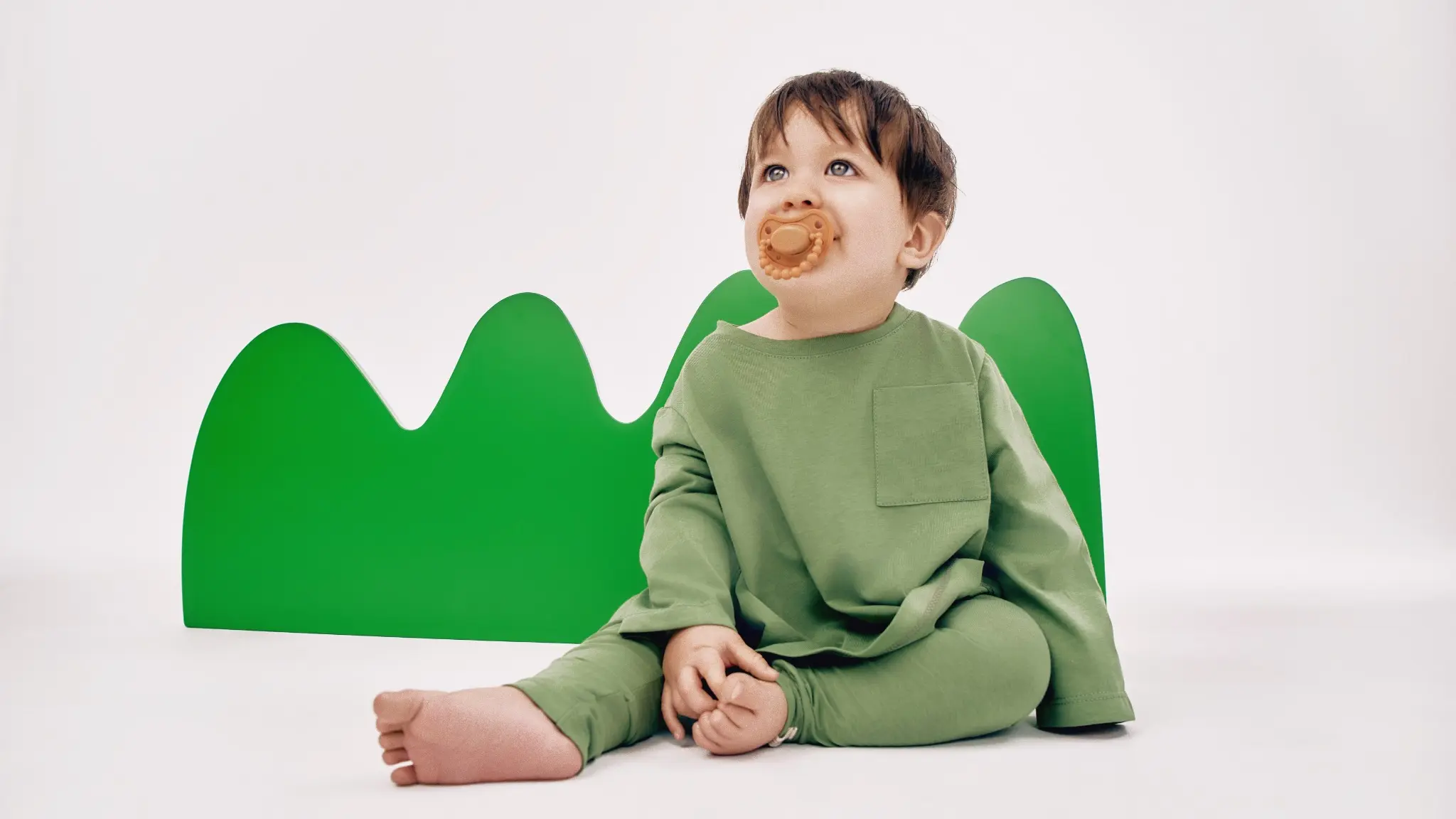
If your baby settles best with a dummy, you are not alone. For many families, it is one of the quickest ways to calm a newborn at 3am, ease transitions to sleep, or take the edge off a fussy day.
Most problems do not come from using a dummy at all - they come from small, common mistakes around size, timing, hygiene, wear and tear, and how long the habit continues. The good news is that each one is fixable with a few simple checks.
This article focuses on practical, real-life “how to avoid it” steps and a clear explanation of what can go wrong, without turning dummies into something to fear. For deeper background on choosing a dummy for oral development, you can also read our earlier guide: How to Choose a Dummy That Supports Healthy Oral Development.
Mistake 1: Using the wrong size for your baby’s age
Dummy sizing is not just a marketing label. A teat that is too small may sit oddly in the mouth, while a dummy that is too large can trigger gagging and encourage a baby to push it forward with the tongue. Either way, it can turn soothing into a struggle.
How to avoid it:
- Use the manufacturer’s age guidance as your starting point (for example 0-3 months, 3-6 months, 6 months+). Brands vary, so do not assume one brand’s “6m+” matches another’s.
- Watch what happens at rest: if the shield presses hard into the skin, the dummy seems unstable, or your baby cannot keep a comfortable seal, reassess size.
- Re-check after growth spurts. Around major developmental jumps, babies can suddenly “outgrow” what used to work.
- Do a quick safety check every time: the dummy should have a shield large enough that it cannot fit fully into the mouth, and ventilation holes.
Practical comparison: what “wrong size” looks like
| What you notice | Possible cause | What to try |
|---|---|---|
| Baby gags or retches when dummy is offered | Teat or shield may be too large/long for their current stage | Try the smaller size and offer when baby is calm, not already crying |
| Dummy keeps popping out or baby cannot keep a seal | Teat may be too small/short, or shape not matching baby’s suck | Check age range; try a different size or a more orthodontic-style teat |
| Red marks around the mouth | Shield pressing too firmly or poor fit | Reassess size; check shield shape and ventilation holes |
| Baby constantly chews or bites the teat (beyond teething phases) | Could be size mismatch, teething, or comfort-seeking habit | Offer a teether for chewing and keep dummy for soothing/sleep |
Personal insight: If you are unsure between two sizes, do not decide while your baby is already upset. Test fit when they are relaxed (after a feed, during a cuddle) so you can see whether the dummy sits comfortably without frantic sucking.
Where LUU Kids fits in: LUU positioning pacifiers are made in age stages (0-3m, 3-6m, 6m+). If you like the idea of staying within one system as your baby grows, choosing staged sizes can make it easier to adjust at the right time.
Mistake 2: Overlooking teat shape, tongue posture and bite development
Parents often ask, “Do dummies cause crooked teeth?” The honest answer is: it depends on the shape, the intensity and duration of use, and the child’s individual development.
One of the main concerns with prolonged or heavy dummy use is the risk of bite changes such as:
- Open bite - the front teeth do not meet when the back teeth are together.
- Crossbite - the upper teeth sit inside the lower teeth on one side.
- Increased overjet - the top front teeth sit much further forward.
Mechanically, it is about what sits between the gums/teeth and how the tongue rests. The tongue is a powerful “muscle of posture”: when it rests up against the palate (roof of the mouth) during calm breathing, it supports typical oral development. If something regularly occupies that space, or encourages the tongue to push forward and down, it may influence patterns over time.
How to avoid it:
- Look for an orthodontic-style teat (often flatter where it meets the tongue) rather than a very round “cherry” style teat. Different babies have different preferences, but shape is worth considering.
- Use the dummy for specific moments (sleep, settling) rather than as a constant “all-day accessory”. Less time in the mouth usually means less pressure on developing structures.
- Prioritise nasal breathing and relaxed lips when possible. If your baby frequently sleeps open-mouthed or snores, mention it to your health visitor or GP - not because of the dummy alone, but because breathing patterns matter for oral function.
Personal insight: A helpful “reality check” is to notice how often you are re-inserting the dummy. If it has become automatic (every rustle, every pause), try a short wait first: a hand on the chest, rocking, white noise, or offering a feed if it has been a while. Sometimes the dummy becomes a reflex for adults, not a true need for the baby.
Where LUU Kids fits in: LUU Kids’ flagship product is the LUU positioning pacifier. Its nipple construction is designed to give the tongue more space and support a more functional tongue position. It is not a guarantee of outcomes, but if you are choosing based on oral function (not just colour or trend), a positioning concept can be a sensible option to discuss with your clinician if you have concerns.
Mistake 3: Introducing a dummy at the wrong time (especially if breastfeeding)
For breastfed babies, timing matters mostly for one reason: early feeding is a learning process. Some babies move between breast and dummy easily, while others struggle if they are offered an artificial teat before breastfeeding is established.
People often call this nipple confusion, but what many parents actually see is “different sucking mechanics”: a baby may latch more shallowly, slip off, or feed less effectively if they are still figuring it all out.
How to avoid it:
- If breastfeeding is your priority, aim to establish feeding first. Many families wait until breastfeeding feels comfortable and weight gain is on track. If you are unsure, a midwife, health visitor or lactation consultant can help you decide based on your baby.
- Use the dummy after a full feed, not instead of one - especially in the early weeks when feeding also supports milk supply.
- Do not use a dummy to delay feeds when your baby shows hunger cues (rooting, hands to mouth, lip smacking). Use it for comfort once hunger is addressed.
Personal insight: If your baby suddenly seems “fussy at the breast” and you have recently started using a dummy more often, try a 48-hour reset: keep dummy use for sleep only, and focus on calm, skin-to-skin feeds. If things improve, you have a clear clue about timing and frequency.
If feeding feels painful, your baby clicks at the breast or bottle, or weight gain is worrying you, do not troubleshoot alone. These are the moments when tailored support from a qualified professional is worth it.
Mistake 4: Poor hygiene and missing wear-and-tear (replacement)
Dummies live a hard life: they get dropped on pavements, shoved into changing bags, chewed during teething and tugged by tiny hands. Even a good-quality dummy needs replacing. Hygiene and wear are often where “safe dummy use” breaks down in everyday life.
How to avoid it: a simple routine
- Clean and sterilise as appropriate for your baby’s age, following the manufacturer’s instructions. In the early months, many families sterilise more frequently; later, careful washing may be the main routine.
- Use the pull test daily: hold the teat and give it a firm pull in all directions. If you find any tiny tears, thinning, stickiness, swelling, or changes in texture, replace it.
- Check the inside of the teat (if the design allows you to see it). Cloudiness, trapped water, or a smell that does not wash out is a sign to stop using it.
- Keep a spare so you are not tempted to keep using one that looks “a bit off”.
For parents, it can help to have a “home dummy” and an “out-and-about dummy”, stored in a clean case, so you are not rinsing one in a public loo sink and hoping for the best.
Where LUU Kids fits in: this is one reason parents like twin packs - having a second dummy makes replacement and rotation easier, especially at night or nursery drop-off. If you choose any brand, the key is the same: do not stretch the lifespan of a worn teat.
Mistake 5: Leaving weaning too late
Many toddlers keep a dummy longer than parents planned because it still “works”. But as children get older, the balance shifts: more hours with a dummy can mean more impact on the bite, and it can get in the way of practising clear speech sounds (especially if the dummy is in the mouth during play and chatter).
How to avoid it:
- Start by limiting the dummy to key times (sleep, illness, travel) rather than removing it everywhere at once.
- Create dummy-free “chat windows”: meals, story time, and play are great opportunities for oral movement and language.
- Offer a replacement comfort strategy: cuddles, a comforter, or a teether if your child is in a chewing phase.
- Keep boundaries simple: “Dummy stays in bed” is often easier than negotiating on the sofa, in the car and at the park.
If you are seeing bite changes, or your child is still using a dummy heavily, consider asking your dentist, health visitor, or a speech and language therapist for guidance tailored to your child.
Where LUU Kids fits in: when babies move into teething, some families find it easier to reduce dummy time by offering age-appropriate teethers for chewing. LUU Kids teethers are designed for that stage, while keeping the focus on safe materials and development-aware design.
FAQ
What is the best dummy shape for a breastfed baby?
There is not one perfect shape for every baby, but many parents look for an orthodontic-style teat that sits flatter on the tongue and does not take up as much space in the mouth. If breastfeeding is still being established, prioritise a deep, comfortable latch first and use a dummy only when feeding needs are met.
How often should I replace my baby’s dummy?
Replace any dummy immediately if you notice tears, thinning, stickiness, swelling, discolouration, a change in texture, or trapped water. Even without visible damage, follow the manufacturer’s replacement guidance and do the pull test regularly.
Can dummies cause crooked teeth?
Extended and frequent dummy use can be associated with bite changes such as open bite or increased overjet, especially if the dummy is used many hours a day over a long period. Limiting dummy use to sleep/settling and weaning in good time reduces the risk.
When should I give my baby a dummy?
If you are breastfeeding, many families wait until feeding feels established and your baby is gaining weight well. If you are formula feeding, you may choose to introduce a dummy earlier. In either case, avoid using a dummy to delay feeds when your baby shows hunger cues.
How can I wean my toddler off the dummy without constant tears?
Step down gradually: keep the dummy for sleep only, then remove it from naps, and finally from bedtime. Pair the change with a predictable routine, offer another comfort object, and keep the message consistent (for example, “Dummy stays in bed”).
If you would like to explore LUU Kids’ approach to positioning pacifiers and development-informed baby accessories, you can find our range and educational resources on LUU Kids official website.
Note: This article is general education for parents and is not a substitute for individual medical advice. If you have concerns about feeding, breathing, oral development, or your child’s bite, speak to a qualified healthcare professional.


