Baby Dummy Size Guide: Choosing the Right Shape and Size by Age
September 7, 2026

If you have ever stood in front of a wall of dummies wondering which one is “right” for your baby, you are not alone. Brands use different labels (0-3m, 0-6m, 6-18m), babies have different mouth sizes, and what worked last month can suddenly cause red marks or gagging.
This guide focuses on what parents usually want to know first: which dummy size to try now, how to tell if it fits, and how shape and size work together as your child grows. The word “dummy” is the most common term, but you will also see “pacifier” on packaging and online.
Quick sizing reference (start here):
- 0-3 months: smallest, lightest shield and teat, for tiny mouths and early soothing
- 3-6 months: slightly larger teat and shield, for stronger suction and bigger oral cavity
- 6+ months: size for older babies; often sturdier materials for early biting
- 18+ months (toddler ranges vary): some families reduce dummy use; if still using, choose an age-appropriate, robust shield and teat
Why dummy size matters (comfort, safety, oral development)
Dummy sizing is not just a “nice-to-have”. It affects three practical things parents notice every day:
- Comfort and settling: a teat that is too big can trigger gagging, while a teat that is too small may not stay in place once your baby’s sucking gets stronger.
- Fit against the face: the shield should sit comfortably without digging into cheeks or pressing hard under the nose.
- How the tongue and jaw work: your baby’s mouth is growing fast. A good fit supports a more natural sucking pattern and allows the tongue enough room to move and rest.
From a simple mechanics point of view, a dummy is held in place by the lips, cheeks, tongue and jaw. If the teat is too long or bulky for your baby’s current mouth size, it can push too far back and cause gagging. If the shield is too big or heavy, it can pull down, leaving marks and making it easier for the dummy to fall out. If the teat is too small for an older baby, they may clamp harder with their lips and jaw to keep it in, which can change how tension is distributed around the mouth.
Practical note: This article is general education, not personal medical advice. If you are worried about your baby’s feeding, breathing, persistent gagging, or changes in their mouth or teeth, it is worth discussing with your health visitor, GP, midwife, dentist, or a feeding/speech therapist.
Personal insight: Many parents assume “my baby keeps spitting it out” means they hate dummies. Often it is simply a fit issue: the shield is too heavy for their age, or the teat is too small to maintain a seal. So try the next size (or a lighter shield) and re-check the fit signs below.
Dummy sizes by age: what to choose and what to look for
Age ranges on packaging are a starting point, not a rule. Babies grow at different speeds, and prematurity can shift what “fits” at a given calendar age. Use age as your first filter, then confirm by checking fit and behaviour.
Newborn to around 3 months (including many breastfed babies)
What usually works best: the smallest, lightest dummy you can find in a reputable range. At this stage, babies have a small oral cavity and are still coordinating suck-swallow-breathe.
Look for:
- A small, lightweight shield that does not press into the cheeks
- A shorter, narrower teat that sits comfortably without triggering gagging
- Ventilation holes in the shield to reduce skin irritation
If your baby was born early (preterm): you may need a smaller, lighter option for longer. If you are in neonatal follow-up, ask your care team what they recommend for non-nutritive sucking in your baby’s specific case.
Personal insight: When parents tell us “the dummy leaves a ring around the mouth”, we encourage them to check the shield size and shape first. Red marks that fade quickly can happen, but persistent indentation is a common sign the shield is too large or the baby is working too hard to keep the dummy in.
Around 3 to 6 months (stronger suction, more mouth growth)
This is a common transition point. Babies often become more efficient at sucking and may pull a tiny newborn dummy deeper into the mouth, which can lead to more gagging or fussiness.
Look for:
- A slightly larger teat that matches your baby’s growing mouth
- A shield that still sits comfortably and does not block the nose
- Materials and construction designed for frequent use and washing
Common parent concern: “My baby suddenly refuses the dummy.” Sometimes it is not refusal - it is that the sensation has changed (teat too small, shape no longer matches how they suck). Trying the next size in the same brand can be a calmer first step than switching everything at once.
6 months and up (early teeth, chewing and stronger biting)
After 6 months, many babies begin teething and exploring with their mouth. Dummies in this range are usually sized to suit a larger oral cavity, and some are designed to tolerate more chewing.
Look for:
- An age-appropriate teat size (not just “sturdier”)
- Signs your baby is biting through or damaging the teat (replace immediately if so)
- A shield shape that does not rub the skin during active movement
If your baby is regularly chewing the dummy rather than sucking, you may also want to introduce an age-appropriate teether for chewing needs and reserve the dummy mainly for sleep and calming.
18+ months (toddler stage: choosing a size and thinking ahead)
Toddler dummy ranges vary by brand, and many families start reducing dummy use during this period. If you are continuing, choose a size specifically made for older children rather than keeping a smaller baby size “because it seems cuter” - toddlers can clamp and chew powerfully.
Also consider:
- Using the dummy mainly for sleep rather than all day
- Keeping a consistent routine (toddlers often ask more when tired or overwhelmed)
- Planning gradual weaning if that is your goal (your dentist or health visitor can help you choose a timeline that fits your family)
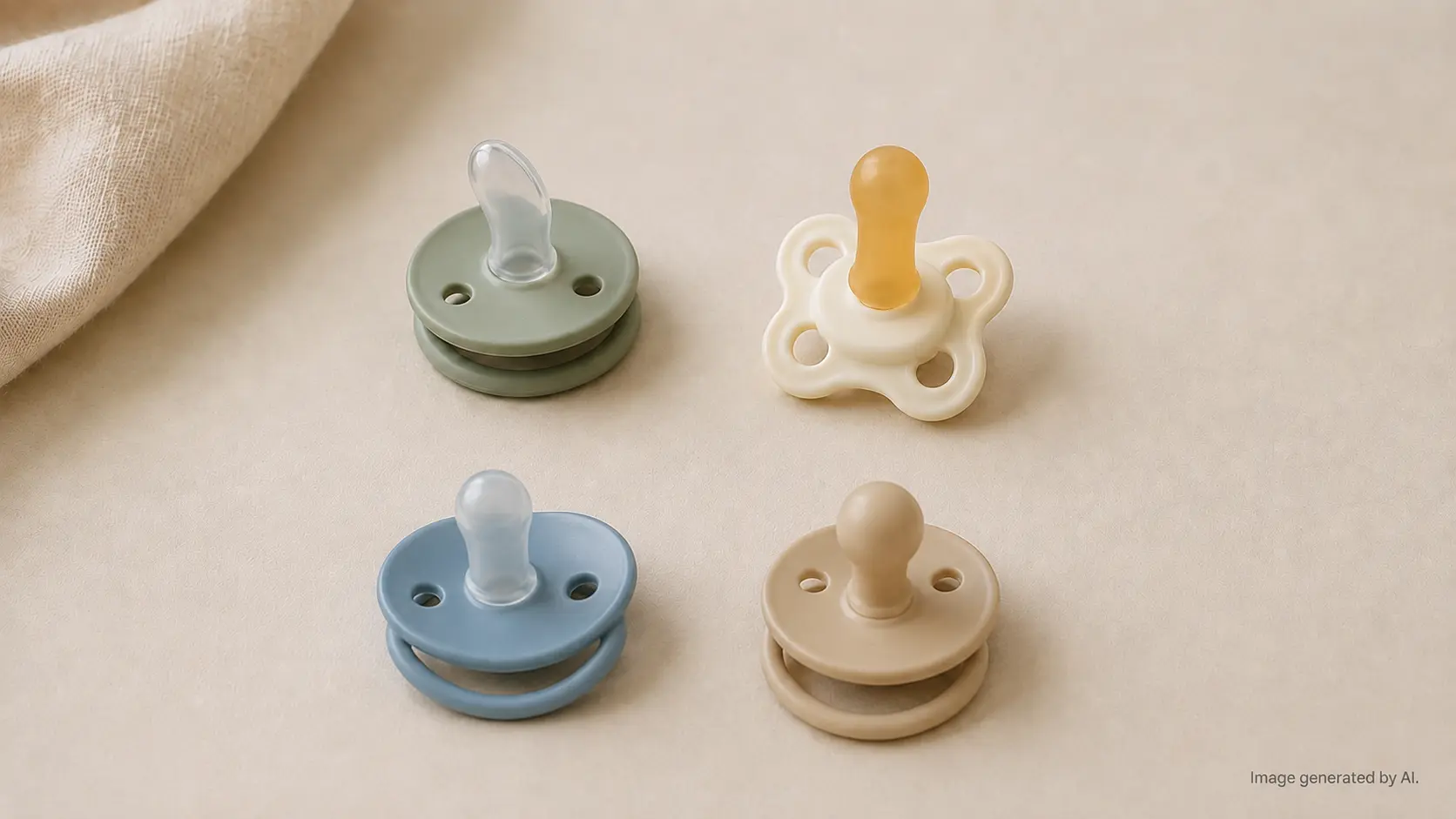
Understanding dummy shapes: symmetrical, orthodontic and round
Shape affects how the teat sits on the tongue and against the palate (the roof of the mouth). There is no single “perfect” shape for every child, but understanding the differences makes shopping far less frustrating.
| Dummy teat shape | What it looks/feels like | How it tends to sit in the mouth | When parents often choose it | Fit tips |
|---|---|---|---|---|
| Symmetrical (reversible) | Same top and bottom | Designed to sit similarly even if baby flips it | Useful if your baby frequently turns the dummy around; popular for convenience | Check the shield sits flat and your baby is not clamping to stabilise it |
| Orthodontic (flattened/angled) | Flatter on one side, shaped to follow the mouth | Intended to reduce bulk against the palate and suit a more “flat” tongue contact | Often chosen by parents thinking about oral development and comfort | Make sure the orientation is correct and the teat size matches age |
| Round/cherry | More bulb-like, rounded tip | Can feel fuller in the mouth | Some babies strongly prefer this feel, especially if introduced early | Be extra attentive to gagging and to whether the teat seems too long for your baby |
How size interacts with shape: a shape your baby loves in one size may not work in another. For example, a round teat that is fine in a newborn size can feel too long once upsized, while an orthodontic teat that worked at 0-3 months might feel too small by 6 months if the baby’s mouth has grown quickly.
If your baby is breastfed, you may be especially sensitive to anything that disrupts feeding. If you notice feeding changes after introducing a dummy, consider adjusting size/shape and discuss with a lactation consultant or your health visitor.
Signs it is time to size up (or switch shape)
Parents rarely need a complicated measurement. Your baby will show you when the fit is off. Here are the most useful signs to watch for:
- Persistent red marks or indentations on cheeks or around the mouth after the dummy is removed (especially if they last beyond a short time).
- Gagging, coughing, watery eyes shortly after the dummy goes in (often a sign the teat is too long/big or sits too far back).
- The dummy keeps falling out even when your baby seems to want it (could be too heavy, shield too large, or teat too small for a stable seal).
- Fussiness that improves when you remove the dummy (discomfort rather than “dummy rejection”).
- Chewing or biting through the teat (time to replace immediately and consider a more age-appropriate size; add a teether for chewing needs).
Personal insight: A surprisingly common mistake is sizing up because “my baby is fussy”, then discovering the bigger teat causes gagging. If your baby is right on the age boundary, try checking the fit signs first: shield marks and gagging usually point to size/shape mismatch, not a need to go larger automatically.
Safety, hygiene and replacement (including BS EN 1400)
Whatever size or shape you choose, safety basics matter as much as fit.
- Check for compliance with recognised safety standards: In Europe, dummies are commonly designed to meet the requirements of EN 1400. Packaging should clearly state the relevant standard(s) the product is made to.
- Inspect daily: Pull the teat in all directions and look for cracks, thinning, stickiness, tears or bite marks. Replace at the first sign of damage.
- Replace regularly: Even without visible damage, materials fatigue over time. Follow the manufacturer’s guidance for replacement intervals.
- Keep it clean and dry: Wash and sterilise according to the manufacturer’s instructions, especially for younger babies. Avoid “cleaning” by putting the dummy in an adult mouth.
- Avoid strings and unsafe attachments: Use only purpose-made, safe dummy clips and follow instructions carefully. Never tie a dummy around a child’s neck.
If your baby has thrush, recurrent skin irritation around the mouth, or you are concerned about allergies, speak with a healthcare professional and consider whether the dummy material and cleaning routine are appropriate.
How LUU Kids approaches sizing and shape
At LUU Kids, our main focus is the positioning dummy. Its nipple construction is designed to give the tongue more space in the oral cavity and support a more natural tongue position while a baby is sucking. We also pay close attention to stage-appropriate sizing, because even a thoughtful shape will not feel right if the size is off.
In practice, that means our positioning pacifiers are offered in age ranges (including 0-3m, 3-6m and 6m+) so parents can move up as their baby’s mouth and sucking strength change. We also offer practical options like twin packs for having a spare, and complementary products such as teethers for the chewing stage.
If you want to explore the LUU Kids range and read more parent-focused guidance, you can start at LUU Kids positioning pacifiers and baby products.
FAQ
What happens if I give my newborn a 6+ month dummy?
For many newborns, a 6+ month dummy is simply too large and can trigger gagging, slipping too far back in the mouth, or leaving strong marks from an oversized shield. If you only have a larger size to hand, monitor closely and switch to a newborn-appropriate size as soon as possible.
Can a dummy be too small for my baby?
Yes. If the teat is too small, your baby may clamp harder with lips and jaw to keep it in place, or the dummy may fall out repeatedly. You might also notice frustration when they are trying to settle.
Why is my baby gagging on their dummy?
Gagging often means the teat is too long/bulky for your baby’s current mouth size, or the shape pushes too far back. Try a smaller size or a different shape, and check that the dummy is oriented correctly (for shapes that have a “top” and “bottom”). If gagging is persistent or severe, seek medical advice.
Should I choose a symmetrical or orthodontic dummy?
Symmetrical dummies are convenient because they work either way up. Orthodontic-style teats are shaped to reduce bulk against the palate and can suit some babies well. The best choice is the one that fits your baby’s mouth comfortably, supports calm sucking (not chewing), and does not leave persistent marks.
How do I know if the shield is the wrong size?
If the shield presses into the cheeks, leaves deep marks, rubs the skin, or sits so close that it blocks the nose, it is likely too large or poorly shaped for your baby’s face. A well-fitting shield should sit comfortably with space for airflow.
My baby keeps spitting the dummy out - do they hate it?
Not necessarily. It can be a sign the dummy is too heavy, the teat is too small to maintain a seal, or the shape is not matching how your baby sucks. Try an age-appropriate size change within the same brand first, then consider shape changes if needed.