
August 31, 2026
Choosing a Dummy for Healthy Oral Development: A Parent’s Guide
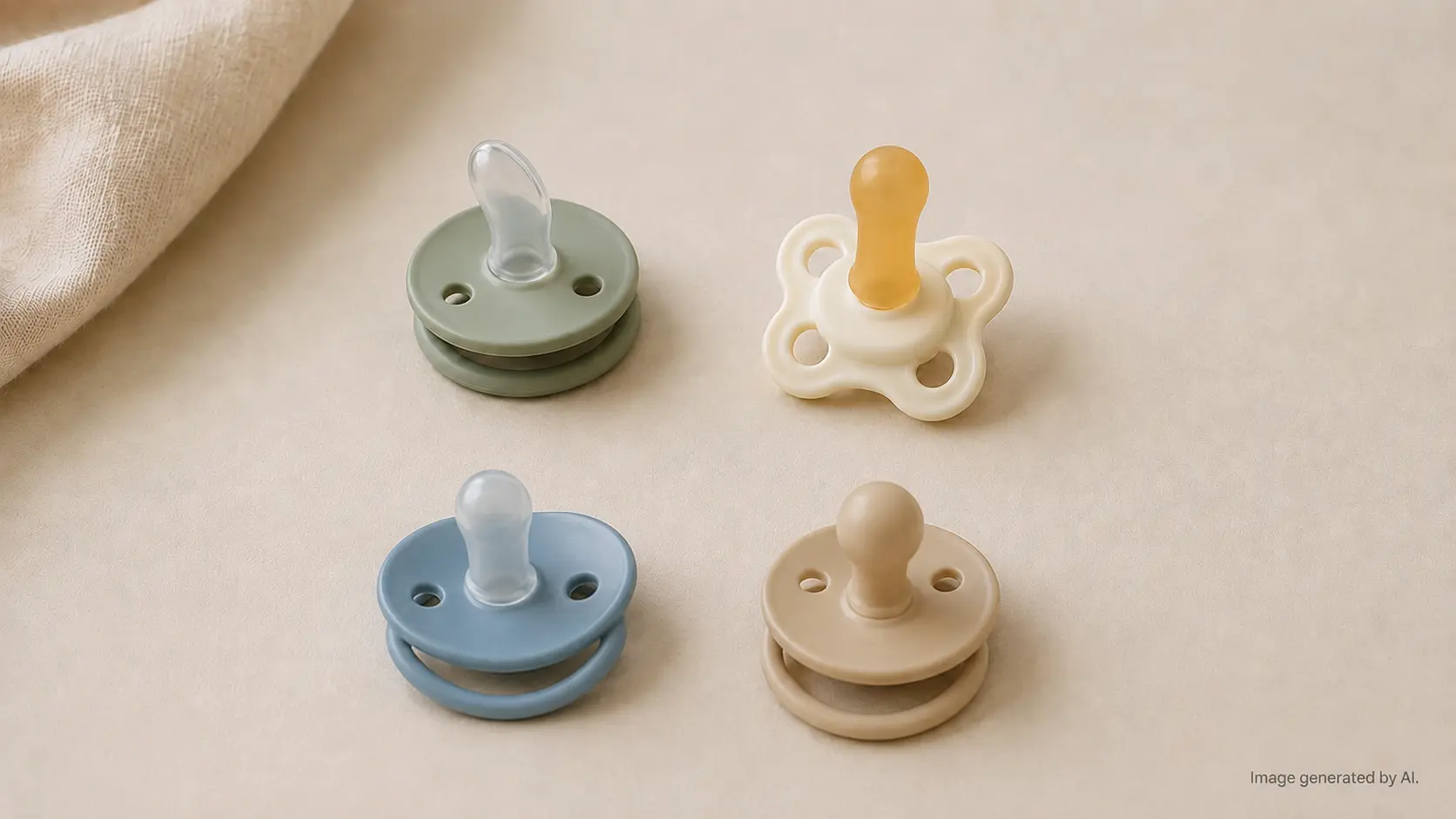
If you are standing in front of a wall of dummies wondering which one is “best”, you are not overthinking it. A dummy can be genuinely helpful for soothing, sleep and comfort, but its shape and fit also affect what your baby’s tongue and jaws do thousands of times a week.
This guide focuses on practical selection: what to look for in a dummy if you want to support healthy oral development (without turning this into a scary topic), and when it makes sense to limit or stop use.
Why dummy shape matters for oral development
Your baby’s mouth is not just “teeth in the future”. It is a working system: lips, tongue, cheeks, palate (roof of the mouth) and jaw joints all coordinate for sucking, swallowing, breathing and later chewing and speech.
A dummy sits in the middle of that system. If its shape or size asks the tongue and jaws to work in an awkward way, it can add extra pressure to developing structures, especially when used for long periods.
What parents can take away: look for a dummy that fits your baby’s current mouth size and encourages a natural tongue position and jaw movement, then use it thoughtfully (not as an all-day habit).
Practical insight: If a dummy routinely leaves deep marks around your baby’s lips or your baby has to strain to keep it in, treat that as a fit issue. It often improves more by changing size/shape than by trying to “get them used to it”.
Traditional vs. orthodontic dummies: what’s the difference?
In shops you will usually see two broad styles: traditional round “cherry” nipples and flatter, shaped (often labelled “orthodontic” or “anatomical”) nipples. Labelling varies by brand, so it helps to focus on the physical features and how they sit in the mouth.
| Feature | Traditional round ("cherry") dummy | Orthodontic/anatomical style dummy |
|---|---|---|
| Nipple shape | More cylindrical/round | Often flatter with a shaped top/bottom to match the mouth |
| Tongue space | May take up more room in the oral cavity | Often designed to leave more functional space for the tongue |
| Pressure on gums/teeth area | Can place broader pressure depending on fit and use | Typically designed to distribute pressure more gently (varies by model) |
| Orientation | Usually symmetrical | May have a preferred “up/down” position |
| What matters most | Correct size, a stable shield, safe materials, and limited duration of use are key regardless of style. |
LUU Kids focuses on what it calls a positioning dummy: a nipple construction designed to give the tongue more space in the oral cavity and support a more functional tongue position during sucking. Think of it as one possible approach within the broader “choose a dummy that respects oral function” goal.
A quick checklist: how to choose a dummy
Use this as a shopping checklist. You do not need a perfect dummy - you need a good fit and sensible use.
- Age-appropriate sizing: look for narrower age bands (for example 0-3 months, 3-6 months, 6 months+) rather than a broad “0-6 months” range.
- A nipple shape that supports function: many parents prefer an orthodontic/anatomical shape that is flatter and leaves more tongue space.
- Lightweight design for newborns: a very heavy dummy can fall out easily and can encourage your baby to clench to keep it in.
- Shield fit and airflow: the shield should sit comfortably without pressing into the skin, and airflow holes are a plus for comfort.
- One-piece vs. multiple parts: follow the manufacturer’s safety guidance and check for secure construction.
- Material choice: silicone and latex feel different (latex is softer but can wear faster). Choose what your baby tolerates and replace when worn.
- Easy to clean: if it is fiddly to clean at 3am, it will not get cleaned as well as it should.
Practical insight: Buy two of the same dummy once you know your baby accepts it. One can be in use while the other is cleaned, and it reduces the temptation to keep a worn dummy “just because it’s the only one they like”.
Avoiding “dummy teeth”: when to worry and when to wean
“Dummy teeth” is a catch-all phrase parents use for changes in how teeth meet (bite) or for teeth that look slightly tipped. Dummies can contribute to bite changes, especially with frequent, prolonged use as teeth come in.
Two helpful realities to hold at the same time:
- Duration matters: long daily hours of sucking are generally more influential than a short, soothing use at sleep times.
- Timing matters: the longer dummy use continues into toddler years, the more likely it is to affect the bite.
Many families find it realistic to start reducing use once a dummy is no longer needed for frequent calming - often by limiting it to naps and nights first. For personalised weaning timing, especially if you are noticing bite changes, ask your dentist, health visitor or another qualified professional.
Practical insight: If you want to cut down without a battle, try “dummy zones” rather than an immediate ban (for example: cot and pram only). Parents often find this easier to stick to, and children adjust faster when rules are consistent.
Dummies and breastfeeding: reducing the risk of nipple confusion
Some babies move between breast and dummy without issues; others become fussy at the breast if they are offered a dummy very early and very often. What parents call “nipple confusion” is usually about different sucking mechanics and different flow: at the breast, the baby needs a deep latch and coordinated tongue and jaw movement to transfer milk.
If you are breastfeeding and want to introduce a dummy, these steps can help:
- Prioritise feeding cues first: offer the breast when your baby is hungry; use a dummy for comfort after feeds if needed.
- Choose a dummy that encourages a functional suck: many parents prefer a shaped nipple that leaves room for the tongue and does not require clenching.
- Keep it purposeful: a dummy for sleep/settling is different from constant daytime use.
LUU Kids designs its positioning pacifiers around oral function and tongue space, which is why some breastfed families consider them when they want a dummy that is intended to be more anatomy-respecting. If feeding is painful, latch is difficult, or weight gain is a concern, a dummy choice should not be the only change - speak with a midwife or lactation consultant.
Sizing and dummy rejection: why babies suddenly refuse
It is common for a baby to accept a dummy and then suddenly refuse it (often around the time their sucking patterns mature and their mouth grows quickly). Rejection can mean: the nipple is now too small/too large, the shield feels uncomfortable, or your baby simply prefers a different texture.
Signs it may be time to size up or switch style:
- your baby keeps spitting it out and cannot keep a seal
- the dummy leaves persistent pressure marks
- you hear clicking sounds (seal breaking) or see a lot of jaw strain
- your baby gags on insertion or seems irritated by the shield
Look for brands that offer stage-based sizing in smaller steps. For example, LUU Kids offers positioning pacifiers in 0-3 months, 3-6 months and 6 months+, with the 0-3m version designed to be particularly small and lightweight for the earliest weeks. The point is not to constantly buy new products; it is to match the dummy to rapid early growth so your baby is not working around a poor fit.
Hygiene and replacement: keeping dummy use safer
Dummies spend a lot of time on floors, in pockets and under sofas. Good hygiene is about reducing risk without making parents feel they must sterilise everything endlessly.
- Follow the manufacturer’s cleaning instructions: cleaning and sterilising recommendations vary by material and age.
- Inspect daily: look for tears, sticky spots, thinning, or changes in texture.
- Replace when worn: a damaged dummy is a safety issue, not just a cosmetic one.
- Keep spares: it makes hygienic routines simpler, especially when out and about.
When to speak to a professional
General advice is helpful, but sometimes you need a personalised look at your child’s mouth, feeding and breathing patterns. Consider speaking with a qualified professional (dentist, orthodontist, health visitor, speech and language therapist, or feeding therapist) if:
- you notice persistent bite changes, mouth-open posture, or your child struggles to keep lips closed
- dummy use feels “compulsive” and is hard to limit even with routines
- breastfeeding or bottle-feeding is difficult, painful, or your baby seems unable to keep a seal
- you suspect a tongue-tie or other oral restriction affecting feeding
Through its educational work with specialists in areas like orthodontics, speech/feeding therapy and lactation, The Healthy Kids CLUUb aims to help parents understand the “why” behind choices such as dummy shape and tongue position. Use education to guide your decisions, and use professionals for individual assessment when something does not feel right.
Frequently asked questions
Are orthodontic dummies actually better for teeth?
They can be a better choice because many are shaped to reduce bulk in the mouth and encourage a more functional tongue position. However, fit, material, and (most importantly) how long and how often a dummy is used all matter. A well-fitting dummy used mainly for sleep is generally lower risk than any dummy used for many hours every day.
How many hours a day should my baby use a dummy?
There is no single number that fits every baby. A practical approach is to keep dummy use purposeful (settling and sleep) rather than constant, daytime comfort. If your baby uses a dummy for most waking hours, consider gradually limiting it to specific times.
Will “dummy teeth” correct themselves?
Some bite changes in young children can improve after dummy use is reduced or stopped, particularly when the habit ends earlier rather than later. If you can see a clear change in how teeth meet, or you are worried, check with a dentist for advice tailored to your child.
When is the best time to size up a dummy?
Size up when the dummy no longer fits comfortably or your baby cannot maintain a seal (frequent dropping, clicking, gagging, pressure marks). Look for stage-based sizing such as 0-3 months, 3-6 months and 6 months+ and follow the brand’s guidance for that model.
My baby refuses every dummy. Should I keep trying?
No. Some babies simply do not want a dummy, and that can be completely normal. If you are trying again, do it calmly, try a different shape/material, and avoid pushing it when your baby is hungry or overtired. If refusal comes alongside feeding difficulties, seek professional support rather than focusing only on dummy choice.
Next steps: choose calmly, use thoughtfully
If you want one simple rule: pick a dummy that fits your baby’s current stage, supports a comfortable seal without jaw strain, and then keep use intentional (mostly for settling and sleep).
If you would like to explore LUU Kids positioning pacifiers and see the age-stage options (0-3m, 3-6m, 6m+), you can start here: shop LUU Kids positioning pacifiers on the official website.


