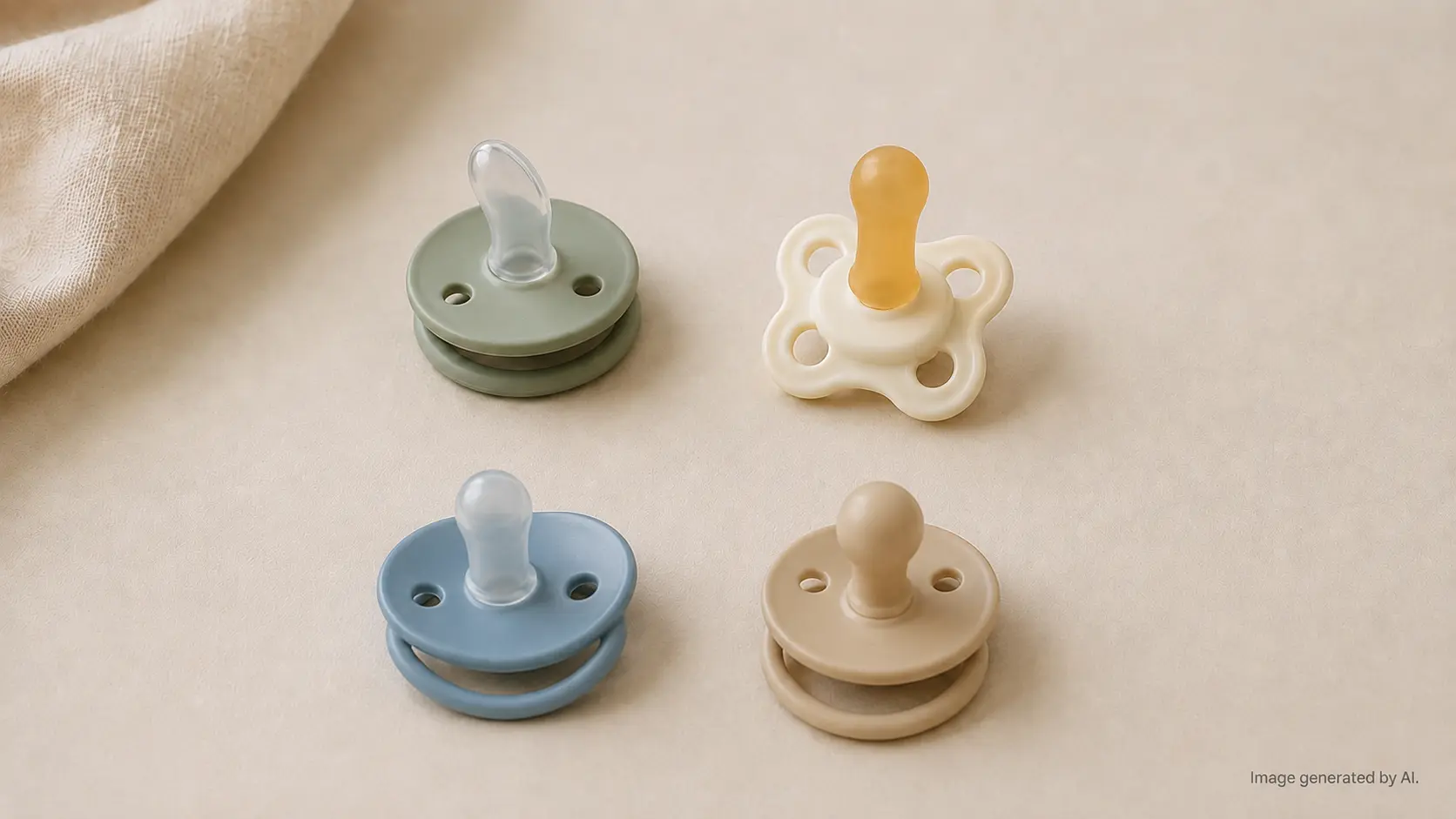
How Dummies Affect Your Baby's Tongue Position and Bite Development
September 3, 2026
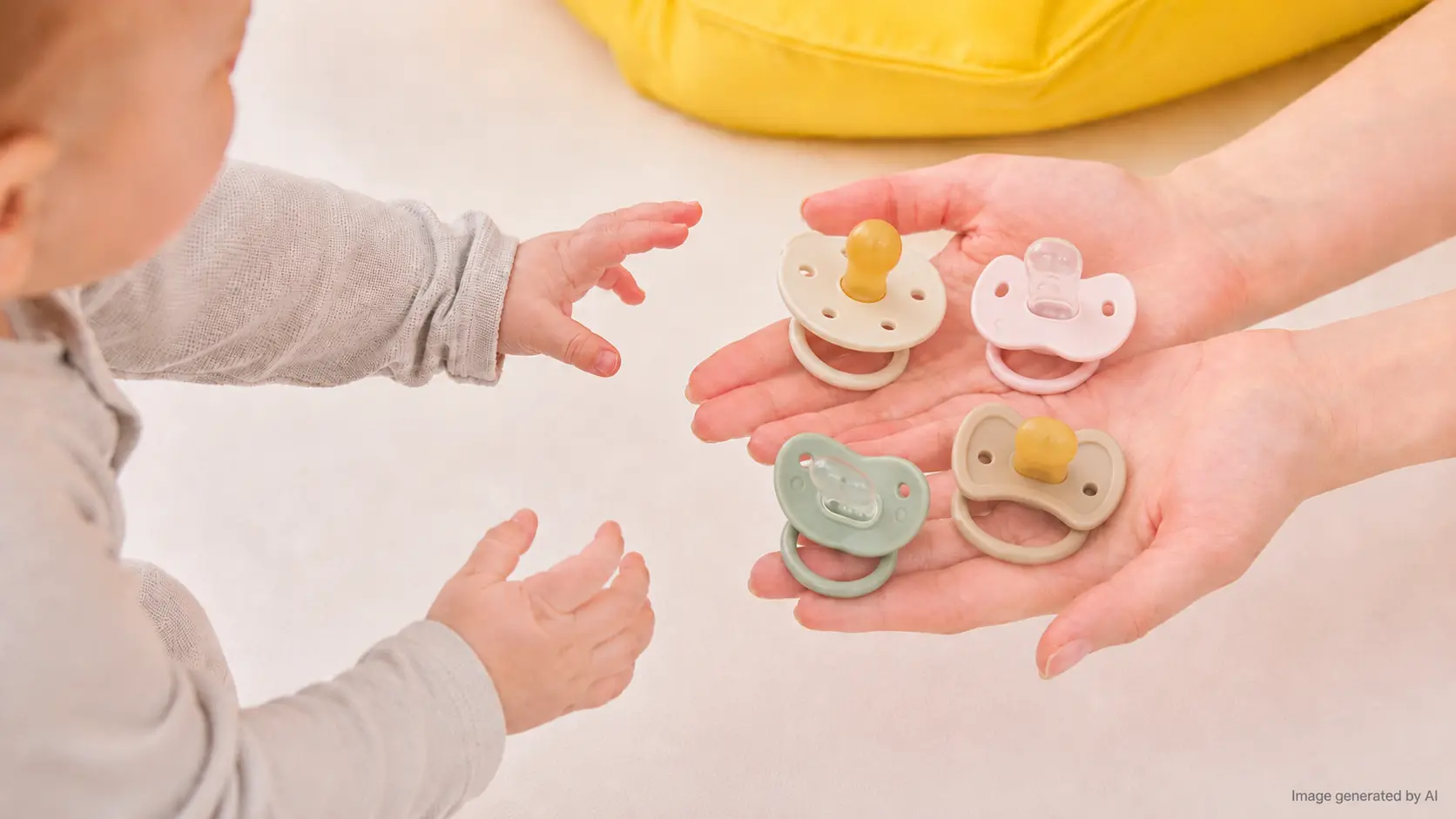
If your baby loves their dummy (pacifier), you're not alone. For many families it's a simple, safe way to settle a newborn, support sleep, and take the edge off fussy moments. And you do not need to feel guilty for using one.
At the same time, parents often notice small things and start to worry: "Why does the dummy keep falling out?" "Is it changing how my baby holds their tongue?" "Could it affect their teeth later?" Shape and daily habits can matter, especially as your baby grows.
This article explains the mechanism in plain language: how tongue position supports oral development, how some dummy designs may interfere, what "dummy teeth" usually means, and what practical steps can reduce risk.
Key takeaways
- Tongue-up posture matters. When the tongue rests up against the palate, it acts like a gentle, natural scaffold that supports the shape of the roof of the mouth as your baby grows.
- Shape and use both play a role. A bulky or poorly fitting dummy can encourage the tongue to sit lower, and long daily use increases the chance of bite changes.
- "Dummy teeth" usually refers to an open bite or crossbite. These are bite patterns associated with prolonged sucking habits, not an instant result of short-term dummy use.
- "Orthodontic" is not a magic word. Look for designs intended to leave space for the tongue and reduce pressure on the palate - then use them sensibly.
- Weaning timing matters. Many professional guidelines focus on reducing and stopping dummy use by around 2-3 years to lower the risk of lasting bite changes.
Why tongue position matters for babies
Your baby's mouth is not just about future teeth. It's part of a bigger system that includes feeding, breathing, and the early foundations for speech.
A helpful way to picture it is this: the palate (roof of the mouth) is still developing, and the tongue is a powerful muscle that sits right underneath it. When the tongue rests up, broad and relaxed, it provides gentle, consistent pressure that helps guide the shape of the palate as your child grows.
Think of the tongue like a soft scaffold or mould inside the mouth. It does not "push the palate open" overnight, but over time, natural tongue posture and swallowing patterns influence how the palate forms and how much room the upper jaw has for future teeth.
When the tongue is habitually held low (for example, because something in the mouth takes up too much space), that supportive effect is reduced. Over months and years, this can contribute to a narrower palate and less ideal bite relationships in some children - especially when combined with long hours of sucking.
Personal insight: Parents often focus on the teeth they can see, but early oral development is mostly about habits you cannot see. If you want one simple thing to watch for, notice how your baby looks when relaxed and not sucking: is the mouth usually closed and calm, or always open with the tongue sitting low?
How dummy shape can change tongue posture
A dummy works by providing something to suck on. That means it shares space with the tongue. The way that space is managed depends on the nipple shape, size, and how it sits in your baby's mouth.
Some shapes (especially very bulky nipples or designs that flatten broadly across the tongue) can encourage the tongue to drop down and forward. This matters because a low tongue posture changes what presses on the palate: instead of tongue-up support, the palate may experience more upward pressure from the dummy itself.
It is also worth remembering that babies grow quickly. A dummy that fitted well at 0-3 months can become too small or sit oddly as the mouth gets bigger, which may change sucking pattern and tongue posture.
Personal insight: If the dummy constantly pops out, or your baby needs to "work hard" to keep it in, that can be a sign of poor fit or a shape mismatch (not a sign you're doing anything wrong). In those cases, many parents find it useful to reassess size and shape rather than offering the dummy more often.
Understanding "dummy teeth": open bite and crossbite
"Dummy teeth" is a common parent phrase, but it is not a diagnosis. It usually refers to bite changes linked with prolonged sucking habits (dummy use or thumb sucking). Two common patterns are:
- Anterior open bite: the front teeth do not meet when the back teeth are together, leaving a gap at the front. This can affect biting into foods and sometimes speech sounds later on.
- Crossbite: some upper teeth sit inside the lower teeth when biting down (often due to a narrower upper jaw). This can involve one side or both sides.
These changes are not guaranteed, and they do not happen from a dummy used occasionally in early infancy. Risk tends to increase with:
- Duration: months and years of regular use
- Daily exposure: many hours per day, especially continuous sucking
- Intensity: very vigorous sucking patterns
- Age: continued use as the bite develops through toddlerhood
Many paediatric dental resources emphasise that reducing a sucking habit earlier gives the mouth more opportunity to return toward a typical pattern as growth continues.
Choosing a dummy that supports oral development
Parents often ask for the "best orthodontic dummy". It is more helpful to think in terms of features and fit rather than a label.
In general, a dummy that is designed with oral development in mind aims to:
- Leave room for the tongue so it is not forced down
- Reduce pressure on the palate compared with very bulky shapes
- Encourage a stable, comfortable latch that does not require constant clenching
- Match your child's age and mouth size (size matters as much as shape)
| What to consider | Traditional flat/bulky dummy (common issues) | Oral-development focused / positioning style dummy (typical aims) |
|---|---|---|
| Tongue space | May take up tongue room and encourage a low tongue posture | Aims to create more space so the tongue can sit higher and wider |
| Pressure on palate | Can place more direct pressure against the roof of the mouth | Often designed to reduce and redistribute pressure |
| Fit over time | May be used too long in one size because it is familiar | Usually comes in staged sizes that prompt reassessment as your baby grows |
| Parent decision point | Easy to buy, hard to know what to look for | Encourages choosing based on function, not just appearance |
At LUU Kids, our flagship products are LUU Positioning Pacifiers. Their distinctive nipple construction is designed to give the tongue more space in the oral cavity and support a more natural tongue position. They are also available in staged sizes (0-3m, 3-6m, and 6m+), because a good fit changes as your baby grows.
That said, no dummy design can replace healthy habits. Even with a well-designed dummy, it is still wise to limit "all day" use as your child gets older.
Personal insight: A simple boundary that many families find realistic is "dummy for sleep and big upsets", not "dummy as a constant accessory". It reduces total sucking time without turning the dummy into a daily battle.
When a dummy starts affecting teeth (and weaning timing)
Parents often want a clear deadline, but oral development is gradual. Occasional dummy use in the first months is not the same as constant, long-duration sucking through toddlerhood.
Many professional guidelines in paediatric dentistry focus on the idea that the longer a sucking habit continues, the more likely it is to affect bite development. In practical terms, many sources recommend aiming to reduce and stop dummy use by around 2-3 years, because this lowers the risk of more persistent bite changes.
If you are already noticing an open bite, earlier weaning is generally more favourable. In many children, bite relationships can improve after stopping a dummy, particularly when stopped before the permanent teeth stage. If you are unsure, a check-in with a paediatric dentist, orthodontist, or a speech and feeding therapist can help you assess your child's specific situation.
Everyday habits that make a difference
Alongside choosing a thoughtful shape, daily routine matters. A few practical steps can meaningfully reduce risk without adding stress.
Use a dummy intentionally, not automatically
If your baby is hungry, uncomfortable, or overstimulated, a dummy may help - but it should not be the only tool. Try cycling through quick checks first (feed, nappy, temperature, cuddle). Over time this naturally reduces total dummy hours.
Keep an eye on sizing and replacement
As your baby grows, reassess size. A too-small or worn dummy can change how it sits in the mouth. Replace dummies according to the manufacturer's safety and hygiene guidance, and discard at the first sign of damage.
Notice mouth posture when the dummy is out
Look for relaxed, closed-mouth rest and easy nasal breathing. If your child consistently mouth-breathes, snores, or always has an open-mouth posture, it is worth raising with a health professional. These concerns can be unrelated to dummy use, but they do affect oral development.
FAQ
Where should a baby's tongue rest naturally?
Most of the time, the tongue should rest broadly against the roof of the mouth with lips gently closed, especially when the baby is calm and not feeding. This tongue-up posture supports typical palate development over time.
Can an open bite from a dummy correct itself?
It can, especially when dummy use is reduced and stopped earlier (often before age 2-3). Because young children are still growing, the bite can improve once the constant pressure and sucking habit are removed. If the open bite persists or you are concerned, a paediatric dental assessment is a sensible next step.
Are orthodontic dummies actually better for newborns?
Some designs are made to better accommodate tongue space and reduce pressure on the palate compared with more traditional, bulky shapes. However, "orthodontic" is not a guarantee. Fit, sizing, and limiting long daily use matter just as much as the label.
At what age should I start weaning my child off their dummy?
Many families start reducing reliance during the second year and aim to stop by around 2-3 years. A gradual approach often works best: keep the dummy for sleep first, then phase it out from naps, then bedtime, while using comfort routines like cuddles, stories, or a comfort toy.
Does dummy use affect speech development?
A dummy does not "cause" speech delay on its own, but heavy use can reduce opportunities to practise sounds and can encourage an open-mouth posture if a child has it in often. If your toddler uses a dummy most of the day, limiting it to sleep can support more talking and clearer speech practice.
Supporting your baby's smile
Using a dummy is a normal parenting choice, and for many babies it is genuinely soothing. The key is to keep it development-friendly: choose a shape that respects tongue space, keep sizing appropriate, and gradually reduce overall hours as your child grows.
If you would like to explore a tongue-space focused option, you can find more information about LUU Kids and our LUU Positioning Pacifiers on our website: visit LUU Kids for positioning pacifiers and parent resources.
If you have concerns about your child's bite, breathing, feeding, or speech, consider speaking with a qualified health professional for individual assessment.