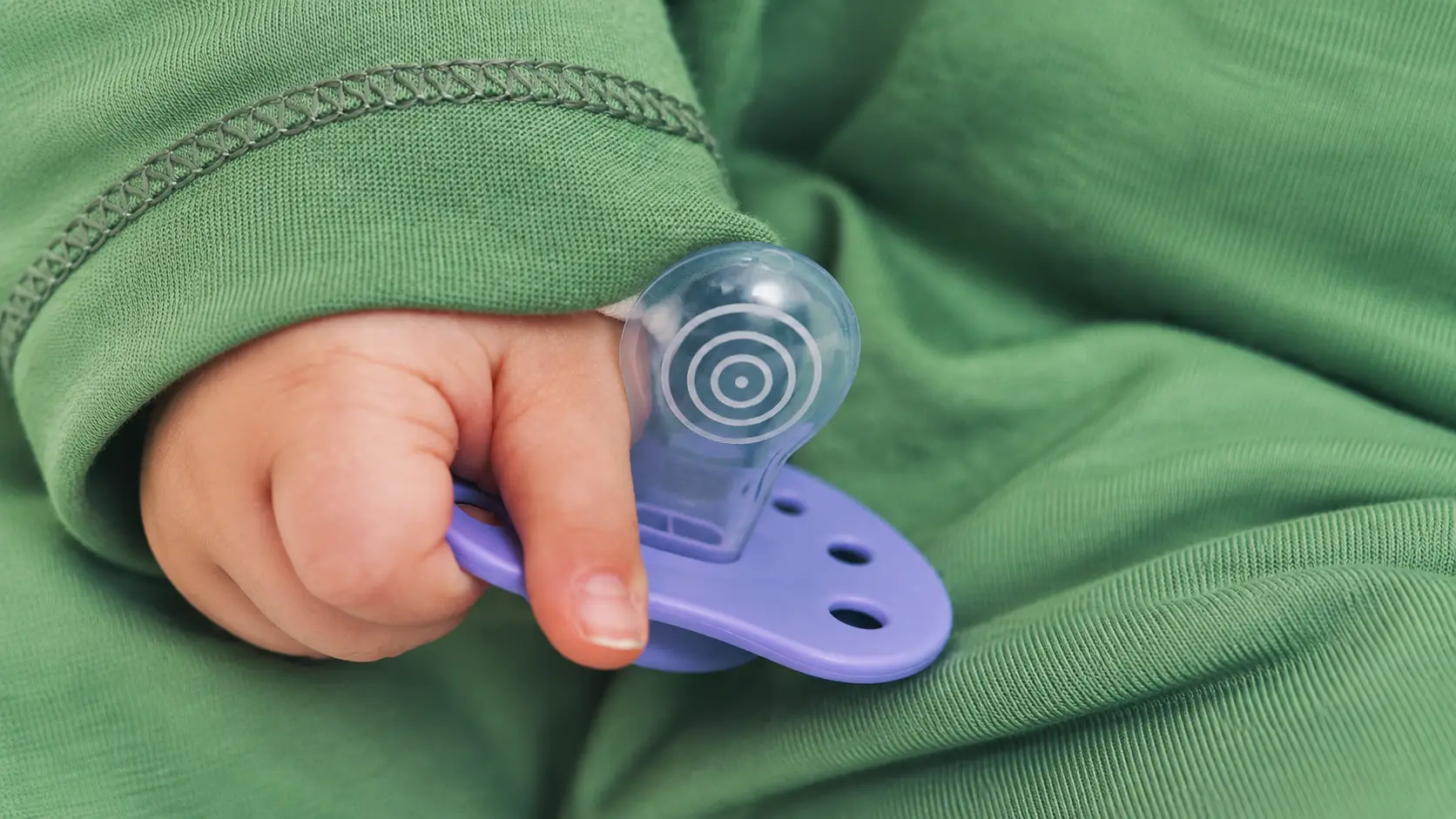
Redness Around Your Baby’s Mouth: Could the Dummy Be Irritating Their Skin?
October 16, 2026
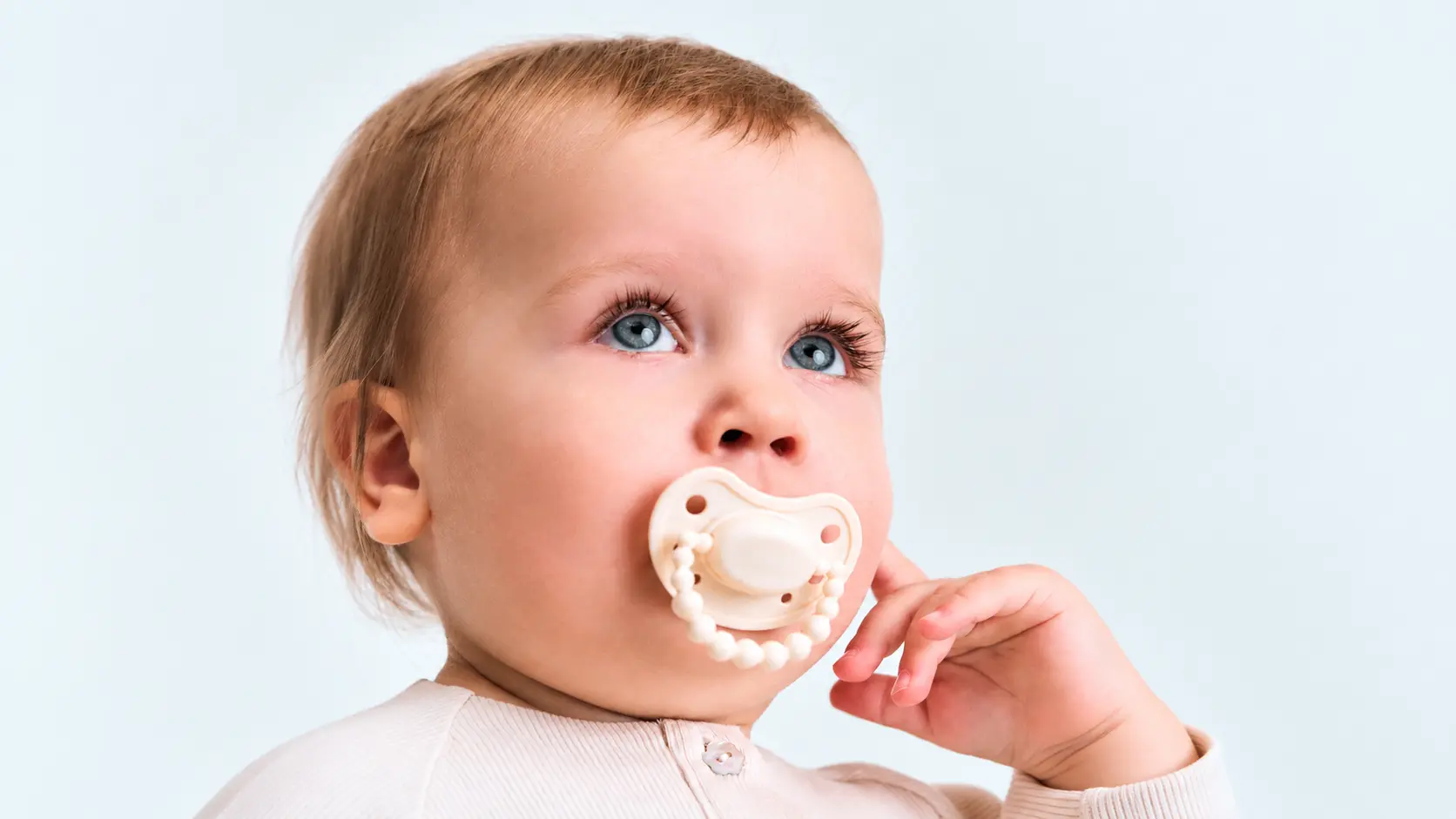
Seeing a red patch on your baby’s face can feel instantly alarming - especially when it sits exactly where the dummy (pacifier) shield touches their skin. Many parents notice it during teething, after longer naps, or on days when there is lots of dribble.
Often, this kind of redness is linked to everyday irritation: saliva sitting on the skin, moisture trapped under the shield, and gentle but repeated rubbing or pressure. That said, location alone cannot tell you the exact cause. The same area can look sore for different reasons.
Why redness can appear where the dummy shield sits
Skin around the mouth is exposed to a lot: dribble, feeds, wiping, and movement. When a dummy is in place, the shield can also change the local skin environment.
Common contributors include:
- Saliva and moisture: Saliva is not “bad” - but if it stays on the skin, it can soften the outer layer and make it easier to irritate (especially in the folds around the lips).
- Friction: Tiny movements while sucking can rub the shield against the skin. Friction is more likely if the area is already damp.
- Pressure points: A shield that presses into the cheeks or upper lip can leave red marks, particularly after sleep or long soothing sessions.
- Increased drool: Teething, colds (mouth breathing), or starting solids can increase saliva and make irritation more likely.
Practical insight: Many parents focus on the dummy itself, but the fastest improvement often comes from changing what happens around it: less wiping, more gentle patting dry, and checking if the shield is leaving indentations when you remove it.
Dummy irritation vs other causes: what you can (and can’t) tell from the skin
Redness where the shield sits strongly suggests contact irritation, but it does not prove it. Babies can have more than one thing going on at the same time (for example, a bit of dribble rash plus sensitive skin elsewhere).
| What you notice | More consistent with external irritation from moisture/friction | Consider other causes and get advice if unsure |
|---|---|---|
| Redness matches the outline of the dummy shield | Often yes - especially if it appears after long dummy use or naps | If it spreads beyond the contact area or keeps worsening, ask a pharmacist/GP |
| Skin looks shiny/damp, with frequent dribble | Often yes - moisture makes skin more vulnerable | If there is cracking, bleeding, or significant swelling, seek advice |
| Dry, rough patches elsewhere (cheeks, body creases) | Could still be irritation around the mouth | May suggest eczema or generally dry/sensitive skin - discuss with a health professional |
| Redness mainly inside the mouth (tongue, inner cheeks), with feeding discomfort | Less likely to be simple shield irritation | Look for NHS advice and professional assessment (do not self-diagnose infections) |
| Fever, your baby seems unwell, or there are blisters/sores | Not typical of simple contact irritation | Use NHS guidance for rashes in babies and seek medical advice |
A helpful boundary is this: this article focuses on external skin where the dummy shield touches. If you are seeing white patches or soreness inside the mouth, or your baby seems in pain while feeding, it is best to use NHS guidance and get an assessment rather than trying to manage it as “dummy rash”.
Gentle care steps for irritated skin around the mouth
If the skin looks mildly irritated (red, a bit dry or slightly sore), gentle care usually starts with reducing moisture and friction.
1) Clean with water and keep it simple
After feeds or a dribbly spell, use lukewarm water and a soft cloth or cotton pad to remove milk/food residue from the skin around the mouth. Avoid fragranced wipes on sore skin if you can - fragrance and repeated rubbing can make irritation worse for some babies.
2) Pat dry - do not rub
Rubbing (even with a soft muslin) can aggravate redness when the skin barrier is already stressed. Patting dry is slower, but it is usually kinder.
Practical insight: A common pattern is “wipe, wipe, wipe” during teething days. Try switching to “blotting” with a clean muslin and changing the muslin when it becomes damp. Less rubbing can mean less redness by the end of the day.
3) Plan “dummy breaks” around naturally calm moments
If your baby will tolerate it, short dummy-free periods can let the skin dry out. Many parents find it easiest to try this right after a nappy change, during a cuddle, or when the baby is happily occupied.
If your baby is teething and seeks something to chew, an age-appropriate teether can help redirect that need. LUU Kids Teethers are one option in LUU Kids’ range, designed for babies at the teething stage.
4) Be cautious with what you apply
Some families use a suitable barrier cream on the skin (not on the dummy) to protect irritated areas. Because babies’ skin can react differently, and because rashes can have different causes, it is sensible to ask a pharmacist or health visitor what is appropriate for your baby.
Do not apply skincare products to the dummy teat/nipple. Applying creams or gels to the teat can affect the material, change how your baby grips it, and may not be safe for swallowing.
Check how the dummy shield sits (fit, friction, airflow)
Sometimes the biggest clue is what the dummy looks like on your baby’s face. A shield that sits very flush can trap dribble; a shield that presses into the cheeks can increase pressure and rubbing.
When your baby is calm, take a quick look:
- Are there deep marks on the cheeks or upper lip when you remove the dummy?
- Does the shield sit tightly against the skin, especially when your baby is sucking hard?
- Does saliva pool under the shield?
LUU Kids’ flagship products are LUU Positioning Pacifiers, created with child development in mind. While the distinctive nipple construction is designed to give the tongue more space and support proper positioning in the oral cavity, day-to-day comfort also depends on how the shield sits against the face. Many dummies (including positioning dummies) use features like ventilation holes and shaped shields intended to support airflow and reduce moisture build-up around the mouth - but no design can guarantee that irritation will not happen, and even silicone can still be associated with reactions in some babies.
Practical insight: If you’re unsure whether the shield is contributing, try a simple observation: take a photo in your own phone for your reference (not for diagnosis) when the dummy has been in for 10-15 minutes, and note where the shield touches. Repeating this over a few days can help you describe the pattern clearly to a pharmacist, health visitor, or GP.
Also remember: correct size matters. Using an age-appropriate size (for example, newborn vs 3-6 months) can change how the shield rests on the face. LUU Positioning Pacifiers are available in sizes 0-3m, 3-6m and 6m+ to match different stages as your baby grows.
Hygiene basics that support skin comfort
Keeping dummies clean will not solve every rash, but it can reduce the chance of further irritation on already sore skin.
- Clean and sterilise according to the manufacturer’s instructions for your dummy. NHS advice for sterilising baby bottles and equipment is a useful baseline approach: NHS: How to sterilise bottles.
- Have a spare dummy so you can swap out one that has fallen on the floor or become very wet. Some parents find twin packs useful for this reason (LUU Pacifier Twin Packs are one practical option).
- Replace worn dummies if the teat shows damage or stickiness, as damaged surfaces can hold onto residue and may irritate the mouth area during use.
If you want to browse LUU Kids products and learn more about the positioning pacifier concept, you can start at LUU Kids.
When to seek advice (NHS guidance)
For mild irritation, gentle care and a little time often helps. But some situations need professional assessment.
Use NHS guidance and seek advice from a pharmacist, health visitor, or GP if:
- the redness is spreading, worsening, or not improving after a few days of gentle care
- the skin becomes broken, very swollen, weepy, crusted, or looks infected
- your baby seems unwell, has a fever, or you notice blisters/sores
- you suspect a rash might be linked to a new food, medicine, or product
The NHS has a helpful overview of rashes in babies and children, including when to get medical help: NHS: Rashes in babies and children
Quick observation checklist
- Where is the redness? Does it match where the dummy shield touches?
- What does the skin look like? Dry, shiny/damp, broken, crusted, or blistered?
- When does it flare? After naps, teething days, after feeds, or after lots of wiping?
- Is your baby otherwise well? Normal feeding, wet nappies, temperature, and behaviour?
- Any signs inside the mouth? If yes, get advice rather than assuming it is only external irritation.
- Does the shield leave deep marks? If yes, review size and how it sits on the face.
FAQ
How long does dummy rash take to settle?
It varies. Mild irritation can improve within a few days once moisture and friction are reduced. If it is not improving, is spreading, or looks infected, seek advice from a pharmacist, health visitor, or GP using NHS guidance on baby rashes.
Should I stop using a dummy if my baby has redness around the mouth?
Not always. Some babies rely on a dummy for soothing and sleep. You can try shorter dummy-free breaks, check the fit, and focus on keeping the skin clean and gently patted dry. If the rash is persistent or severe, get professional advice.
Can I put cream or ointment on the dummy teat?
No. Avoid putting skincare products on the teat/nipple. If you are considering a barrier cream for your baby’s skin, apply it to the skin only and ask a pharmacist or health visitor what is appropriate.
Could the redness be something inside the mouth instead?
Redness on the skin where the shield rests is an external issue. If you notice symptoms inside the mouth (such as persistent white patches, bleeding, or clear feeding pain), it is best to use NHS guidance and seek an assessment rather than trying to manage it as simple dummy irritation.
How often should I sterilise my baby’s dummy?
Follow the dummy manufacturer’s instructions. For general principles on sterilising baby feeding equipment, see the NHS guide: How to sterilise bottles.
Next steps to keep your baby’s skin comfortable
Redness around the mouth is common, and it is understandable to worry when it lines up with the dummy shield. Focus on what you can control: reduce moisture, avoid unnecessary friction, and make sure the dummy size and shield sit comfortably on your baby’s face. If anything seems persistent, spreading, or simply not right, trust your instincts and seek advice.
If you are reviewing your options, you can explore LUU Kids’ range of LUU Positioning Pacifiers (0-3m, 3-6m and 6m+) and other baby essentials on the official website: Explore LUU Kids products and pacifier options.