Baby Chewing Their Dummy? Why It Happens and When to Offer a Teether Instead
September 30, 2026

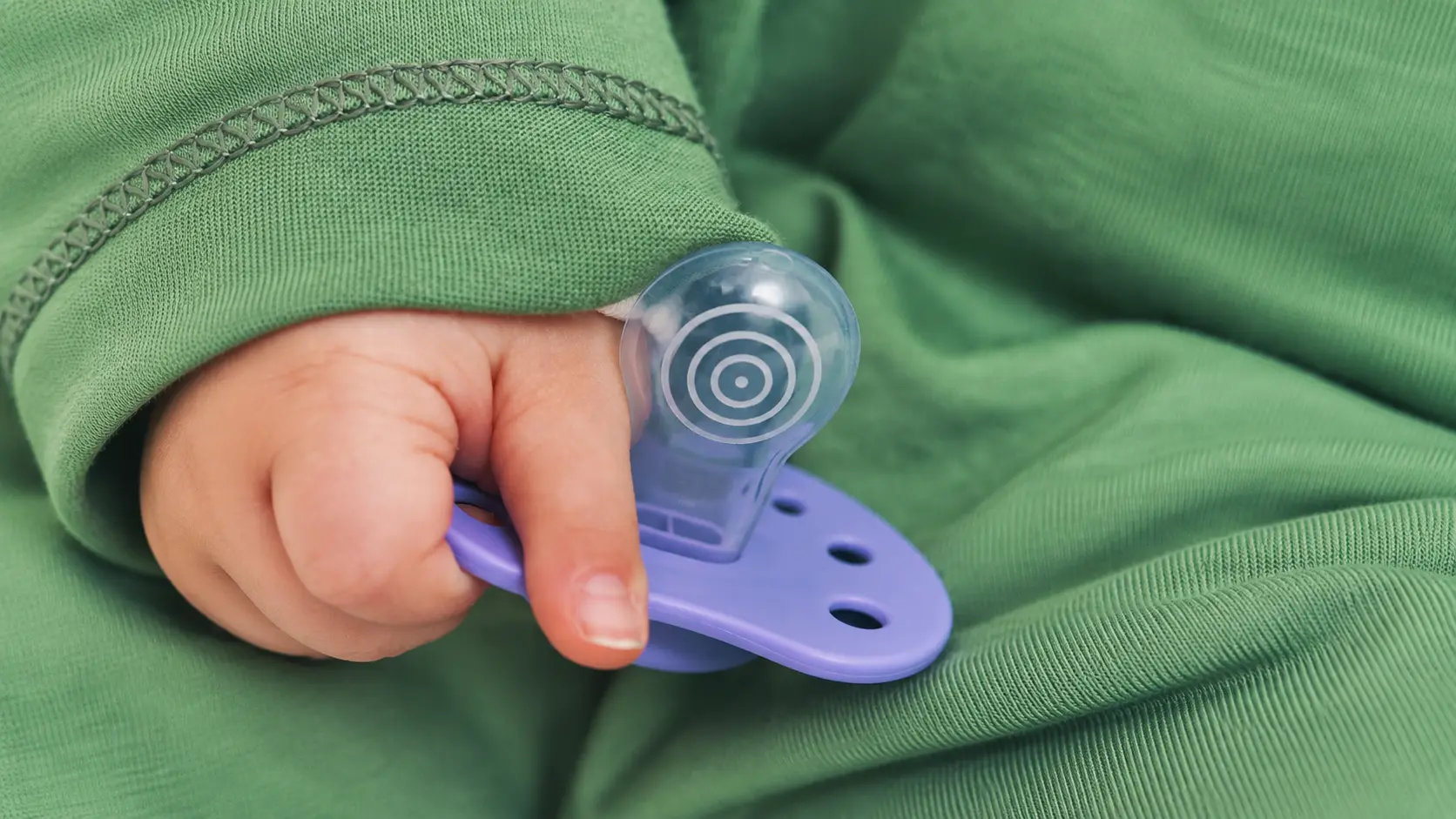
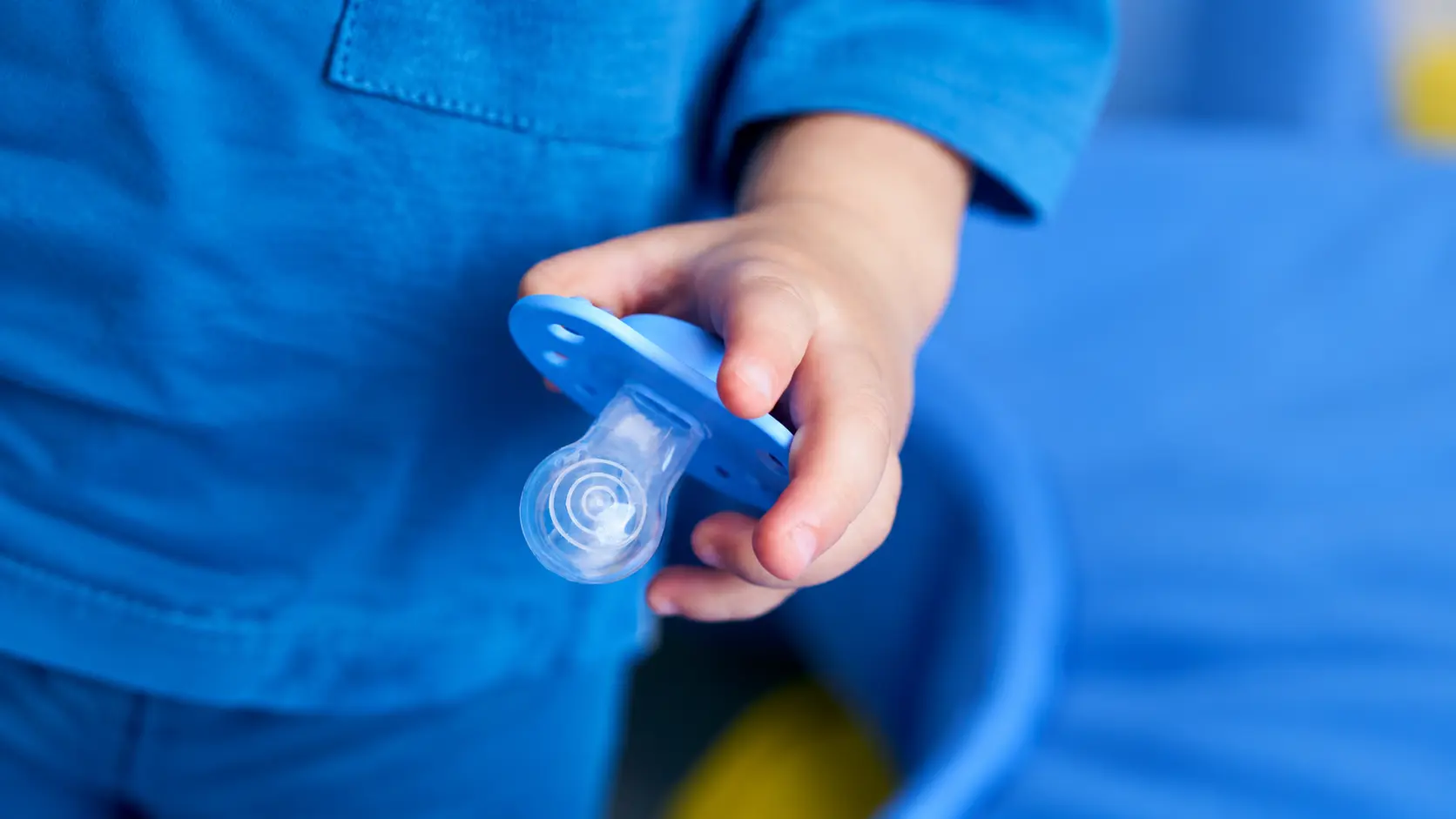
As many parents quickly discover, a baby who used to calmly suck a dummy can suddenly start chomping on it, twisting it sideways, or flipping it around to gnaw the shield or handle.
It can be unsettling (and a bit confusing), especially if teething seems to be starting. The key point is simple: a dummy is made for sucking and soothing, while a teether is made for biting and chewing.
This guide explains why babies chew a dummy during teething, what to look out for, and how to decide what to offer in the moment, without claiming that either product “treats” teething.
Why babies chew dummies when teething
Teething often starts around 6 months, but it can begin earlier or later. During this stage, babies tend to seek two different things with their mouth:
- Sucking for comfort - a steady, rhythmic action that can help babies settle.
- Chewing for pressure - many babies want firmer “counter-pressure” on the gums as teeth begin to move under the surface.
A dummy can still be useful for soothing, but it is not designed to be chewed for long periods. If your baby is biting down repeatedly, they are often telling you they want something more appropriate to bite.
Practical insight: A common pattern is “dummy in, then bite-bite-bite, then frustration”. That is usually your cue that your baby is not looking for soothing through sucking right now - they are looking for something they can safely chomp on.
Dummy vs teether: what each one is for
Both are oral products, but they do different jobs. Thinking in terms of “sucking” vs “chewing” makes the decision clearer.
| Feature | Dummy (pacifier) | Teether |
|---|---|---|
| Main use | Sucking and soothing (non-nutritive sucking) | Chewing and biting (safe resistance for gums) |
| When it helps most | Settling to sleep, calming between feeds, comfort when upset | During awake time when baby wants to bite, drools more, or chews hands/toys |
| What it is designed to withstand | Normal sucking, gentle mouthing | Repeated biting and chewing |
| Best parent cue | Baby latches and sucks rhythmically | Baby clamps down, gnaws, or searches for firmer objects |
At LUU Kids, our main focus is pacifiers - especially our LUU Positioning Pacifiers in age stages (0-3m, 3-6m, 6m+). They are designed for soothing through sucking, with a nipple construction intended to give the tongue more space in the mouth.
When your baby is clearly in “chewing mode”, that is the moment a dedicated teether (such as options in the LUU Kids teethers range) tends to make more sense than offering a dummy and hoping they stop biting it.
Is it safe for a baby to chew a dummy?
A dummy is not meant to be a chew toy. Repeated biting can weaken the teat material over time. The main concern is damage that could create a small tear or loose piece.
Important: If a dummy is bitten, your safety check matters more than the brand or shape.
- Inspect the teat (including the base where it joins the shield). Look for thinning, splits, stickiness, tackiness, swelling, or any rough edges.
- Tug test gently as part of your normal routine checks. If anything looks or feels different, stop using it.
- Discard immediately if damaged - do not try to “get one more day” out of it.
Also follow your manufacturer’s guidance on replacement intervals. As a general rule, many parents work to the “every 4-6 weeks” routine for regular replacement, and immediately if any puncture or tear is detected.
Practical insight: If you keep seeing bite marks, it can be cheaper and less stressful to keep a couple of teethers in rotation, rather than replacing dummies early because they are being used for chewing. It also reduces the temptation to keep using a damaged dummy “just this once”.
If you want a deeper safety checklist for when to replace a dummy, we recommend reading our dedicated replacement guide on the LUU Kids site (rather than repeating every step here): dummy replacement guidance from LUU Kids.
Signs it is time to offer a teether instead
Use this quick checklist during awake time. If you notice several of these together, a teether is usually the more suitable option.
- They flip the dummy around to chew the shield/handle rather than suck the teat.
- They clamp down and hold pressure instead of rhythmic sucking.
- They keep pulling the dummy out, then immediately chew hands, fingers, sleeves, muslins, or toys.
- Extra drool and a constant need to mouth objects (more than their usual exploration).
- Red or puffy-looking gums (you might spot this during toothbrushing or a quick look).
- They seem unsettled while awake, but can still be soothed by chewing more than by sucking.
Note: babies mouth objects for many reasons (normal development, tiredness, hunger). The strongest “teether” cue is the repeated pattern of biting down with intention.
A simple awake-time decision guide
When you are trying to decide what to offer, it can help to use a simple “what is my baby asking for?” approach.
Step 1: Watch what their mouth is doing
- Rhythmic sucking (settling, calmer breathing, staying latched) - offer the dummy.
- Gnawing/biting (jaw working, clamping, chewing hands) - offer a teether.
Step 2: Check the situation
- Sleep or nap time - many babies use a dummy to settle. If your baby is actively chewing it, remove it and offer a teether during awake time instead.
- In the buggy/car seat - if your baby is chewing, a teether can be a safer match for the behaviour than a dummy that may get damaged.
- After a feed - if baby wants comfort sucking, the dummy may help; if they immediately bite, switch to a teether.
Step 3: Do a quick dummy safety check
If your baby has been chewing their dummy, check it right away. If there is any damage, discard it immediately.
Practical insight: Parents often keep offering the dummy out of habit, especially when they are tired. Leaving a teether within reach in the places you most often settle your baby (sofa, changing area, pram organiser) makes it easier to respond quickly without overthinking it.
How to use and clean a teether safely
Always follow the specific instructions that come with your teether (cleaning method, age guidance, and what is or is not allowed). As general good practice:
- Before first use: clean the teether as the manufacturer instructs.
- During use: supervise your baby, especially if they are very young or the teether is new to them.
- Regular checks: inspect for splits, cracks, or damage and stop using it if you find any.
- Cleaning: wash and dry it as directed, particularly after it has been dropped or used outside the home.
For UK parents, the NHS specifically advises using teething rings and cautions against certain practices. The NHS guidance includes not tying a teething ring around a baby’s neck (choking/strangulation risk) and not putting teething rings in the freezer (very cold items can harm gums). You can read the NHS teething advice here: https://www.nhs.uk/conditions/baby/health/teething/.
If you are choosing between products, you might use a LUU Positioning Pacifier for soothing through sucking (in the age-appropriate size), and keep a LUU Kids teether for awake time when your baby clearly wants to chew.
When you are ready, you can explore LUU Kids products and guidance here: visit the LUU Kids website.
FAQ
Will a dummy help with teething pain?
A dummy can help some babies feel calmer through sucking, but it is not made for chewing. If your baby is biting down repeatedly, a teether is usually a better match for what they are trying to do.
Can I give my 3 or 4-month-old a teether?
Some babies show teething behaviours early. If your baby can hold it and mouth it safely, an age-appropriate teether can be used during supervised awake time. Always follow the product’s age guidance and instructions.
What should I do if my baby bites through their dummy?
Stop using it straight away and discard it if there is any damage (tear, puncture, thinning, loose material). Replace it with a new dummy for sucking, and offer a teether for chewing during awake time.
Does chewing on a dummy affect teeth or oral development?
Chewing changes how a dummy is used and increases wear, which is why safety checks are so important. For oral development questions (including dummy shape, sizing, and when to reduce dummy use), consider speaking with a health professional such as your health visitor, dentist, or a paediatric feeding/speech specialist if you have concerns.