How Often Should You Replace Your Baby's Dummy? (Safety Checklist + Sizing)
September 17, 2026
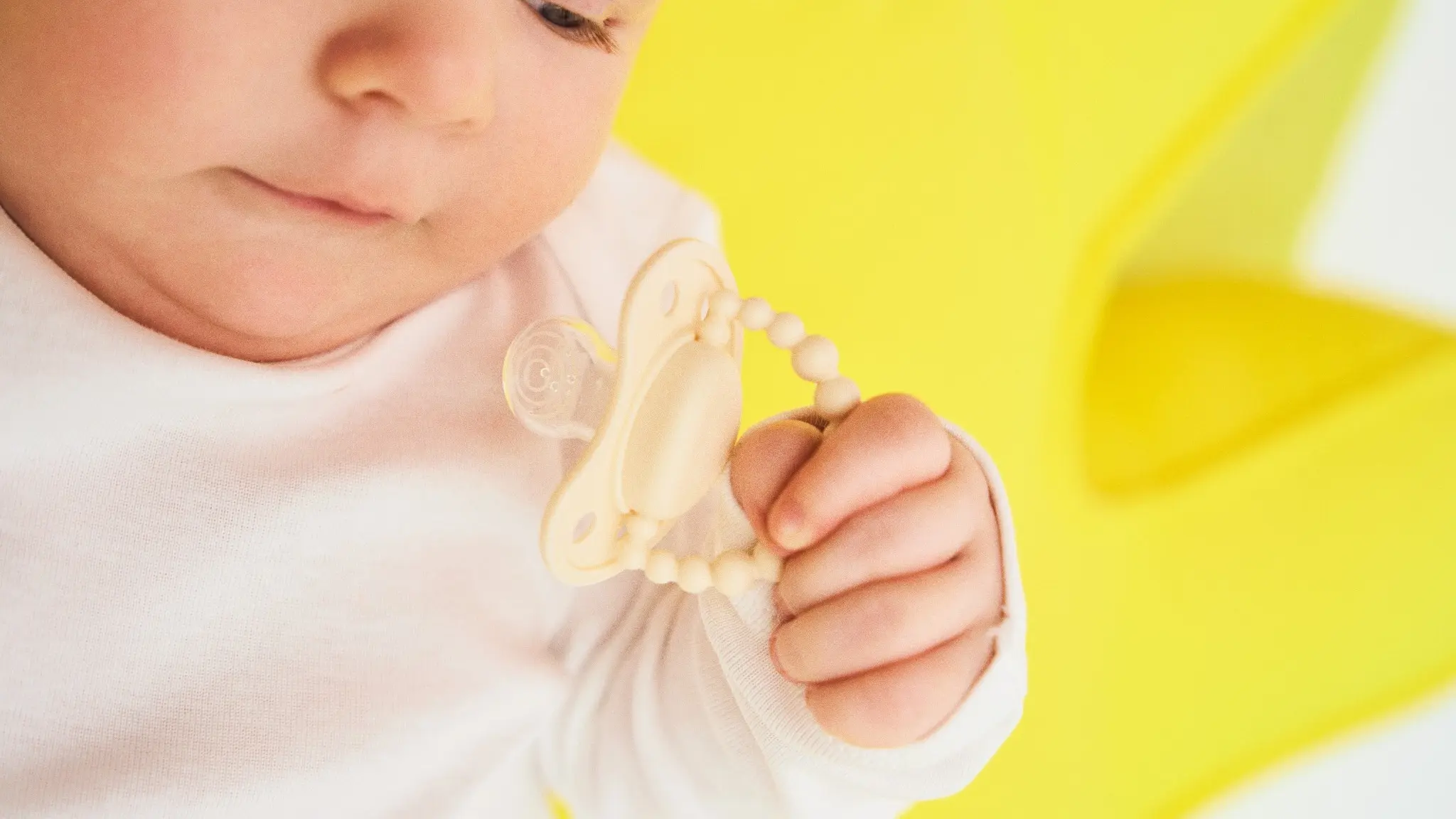
If your baby has a favourite dummy (soother), it can be easy to lose track of how long you have been using it. But for everyday hygiene and safety, a good rule of thumb is to replace a dummy every 4 to 6 weeks, or sooner if you see any signs of damage.
This checklist helps you decide when to swap to a new dummy, what wear looks like in real life, and when it is time to move up a size. It also explains why sterilisation does not “reset” a dummy’s lifespan.
The 4 to 6 week rule (and when to replace sooner)
Most parents do well with a simple routine: replace a baby dummy every 4 to 6 weeks. This timeframe reflects two everyday realities:
- Hygiene: dummies spend a lot of time on floors, in changing bags, and in little mouths that are still developing their immune response.
- Teat degradation: silicone or rubber slowly weakens from sucking, cleaning, and heat exposure (sterilising, boiling, dishwashers).
Replace sooner than 4 weeks if any of the wear signs below appear, or if the dummy has been exposed to something you cannot clean safely (for example, it fell somewhere unhygienic outdoors).
Practical insight: If you cannot remember when you opened a dummy, you are not alone. A quick fix many parents like is to write the “start date” on the storage box, or set a repeating calendar reminder for 5 weeks ahead.
Why dummies need replacing (hygiene vs material wear)
Cleaning matters, but it does not make a used dummy “like new”. Over time, the teat and shield can change in ways that are not always obvious at first glance.
Hygiene: cleaning reduces germs, but does not remove all risk
Regular washing and appropriate sterilisation help reduce germ build-up. That is especially important for newborns and younger babies, and after illnesses.
Material wear: heat and daily use slowly weaken the teat
Silicone and rubber are designed to be flexible, but repeated cycles of hot sterilisation, chewing as teeth arrive, and general wear can cause softening, thinning and micro-tears. That is why a dummy can look “fine” until one day it suddenly feels tacky or starts to split.
Practical insight: If you sterilise frequently (which is common with small babies), it is sensible to be stricter about replacement. High heat is great for hygiene, but it can shorten the working life of the material.
Wear checklist: the clearest signs it is time for the bin
If you are wondering “what are the symptoms of a worn dummy?”, use this quick scan. If you notice any of these, replace the dummy immediately.
- Discolouration: yellowing, cloudiness, or patchy colour changes (especially if they were not there before).
- Sticky or tacky feel: the teat feels gummy or attracts fluff easily, which can mean the material is breaking down.
- Holes, tears, or nicks: even tiny splits can enlarge quickly once sucking pressure is added.
- Change in shape: the teat looks stretched, swollen, flattened, or uneven compared with a new one.
- Unusual softness or thinning: the teat feels weaker, floppier, or “too easy” to bend.
If your baby has started teething, also watch for chew marks. Some babies move from sucking to chewing, and that can damage a teat faster than you expect.
Practical insight: Do your check in bright daylight (or under a strong kitchen light). Micro-tears can disappear in dim nursery lighting, especially at 2 am.
How to do the dummy “pull test” (step-by-step)
A quick pull test helps you spot damage before the dummy goes into your baby’s mouth. It takes less than a minute and is worth doing regularly, especially before naps and bedtime.
Step-by-step pull test
- Wash your hands and make sure the dummy is clean and dry.
- Hold the shield firmly in one hand.
- Tug the teat firmly in all directions (up, down, left, right). You are checking whether it feels secure and intact.
- Twist gently and look closely at the base of the teat where it meets the shield (a common stress point).
- Inspect in bright light for any micro-tears, thinning, stickiness, or a change in texture.
- Check the shield and any ventilation holes for cracks or sharp edges.
If anything looks or feels “off”, bin it. It is not worth the risk of the teat splitting during use.
When to change dummy sizes (0-3m, 3-6m, 6m+)
Many parents assume dummy sizing is mostly about age on the packet. Age ranges are a helpful guide, but the key idea is simple: your baby’s mouth grows, and an appropriate size helps the dummy sit more comfortably and function as intended.
As a general approach:
- 0-3 months: smaller, lighter dummies often suit newborn mouths and reduce the “bulk” resting on the lips.
- 3-6 months: babies usually have a bigger oral cavity and stronger suction, so sizing up can improve stability.
- 6 months+: the mouth continues to grow, and teething often changes how babies use a dummy (more movement, more chewing).
Signs your baby may need a different size
- The dummy seems to sit awkwardly or gets pushed out constantly.
- The shield is pressing uncomfortably against the nose or chin area.
- Your baby seems frustrated, bites down, or cannot settle as they used to.
LUU Kids designs its LUU Positioning Pacifiers in staged sizes (0-3m, 3-6m, 6m+) so parents can match the product to a baby’s changing mouth size without guessing. The goal is a better fit and consistent use, not “bigger is always better”.
Orthodontic and positioning dummies vs traditional shapes
Not all teats are shaped the same. Some are more symmetrical and round, while others are designed to sit in a specific orientation and interact differently with the tongue and palate.
Here is a straightforward comparison to help you understand the trade-offs.
| Feature | Traditional round/cherry teat | Orthodontic/positioning teat |
|---|---|---|
| Typical shape | More bulb-like and evenly rounded | Usually flatter on one side with a shaped profile |
| How it may sit in the mouth | Can take up more central space, depending on size and baby’s anatomy | Often designed to guide placement and leave more functional room for the tongue |
| Fit depends on | Correct size and baby preference | Correct size, correct orientation, and baby preference |
| What to watch for | Over-sized teats or heavy shields that feel bulky | Signs the dummy is the wrong size or sitting oddly (constant spit-out, irritation) |
LUU Kids’ flagship product, the LUU Positioning Pacifier, uses a distinctive nipple construction designed to give the tongue more space in the oral cavity and support its proper positioning. It is one option parents consider when they want a design informed by anatomy and early development, while still keeping the basics (safety checks, right size, regular replacement) front and centre.
If you have specific concerns about your baby’s feeding, tongue position, or oral development, it can help to discuss them with a relevant healthcare professional (for example, your health visitor, a paediatric dentist, or a feeding specialist).
Hygiene tips and making nights easier
Practical hygiene reminders
- Follow the manufacturer’s cleaning instructions for your dummy’s material and age stage.
- Check after sterilisation: once cooled, feel the teat. If it has become tacky, swollen, or oddly soft, replace it.
- Avoid “cleaning” with your mouth: it can transfer adult bacteria to your baby.
- Store spares cleanly: a clean dummy loose in the bottom of a bag often stops being clean quickly.
Two dummies can save your sanity
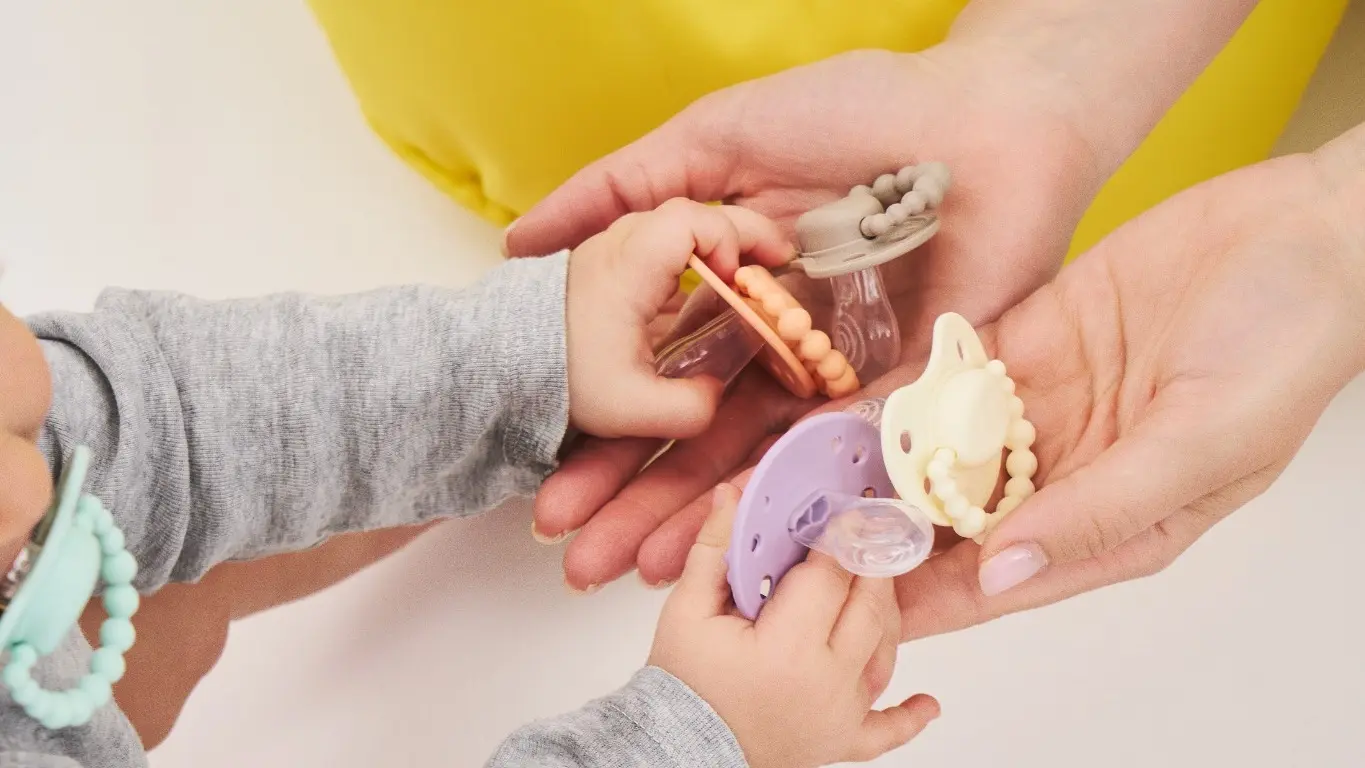
Many families keep one dummy in the cot and one as a spare for out-and-about. That is why twin packs can be genuinely practical: you can rotate dummies, track age more easily, and always have a backup when one goes missing mid-nap.
For nights, some parents prefer a glow-in-the-dark option so you can find it quickly without switching on a bright light. LUU Kids offers glow variants within its positioning pacifier collections for exactly that kind of everyday problem.
FAQ
What should I do with a dummy after oral thrush?
Replace it. If your baby has oral thrush (or you suspect it), speak with a healthcare professional for diagnosis and treatment advice. From a practical hygiene point of view, it is usually recommended to discard and replace dummies used during infection to reduce the chance of reintroducing yeast.
Does boiling or sterilising a dummy make it wear out faster?
It can. Sterilisation reduces germs, but repeated heat exposure can speed up teat degradation (softening, stickiness, micro-tears). Keep sterilising as appropriate for your baby’s age, but do not rely on sterilising to extend a dummy’s lifespan.
What happens if my baby uses a dummy that is too small?
A too-small dummy may be less stable and get pushed out more often, which can mean more fussing and more frequent re-inserting. If you notice constant spit-outs, awkward positioning, or irritation from the shield, consider moving up a size (while still following the 4-6 week replacement routine).
Can I keep using a dummy if it looks fine?
If it is older than 4-6 weeks, it is still worth replacing because material changes are not always visible. Always do a regular pull test and bin it immediately if you notice any change in texture, shape, or integrity.
How can I remember how long we have used a dummy?
Rotate two dummies and mark the date you opened them (on the storage box or in your phone). Replacing on a schedule is easier than trying to judge wear by memory alone.
If you want to choose an age-staged, development-informed option, you can explore the LUU Kids range of positioning pacifiers on the official website: LUU Kids pacifiers and baby essentials.