Why Won’t My Baby Take a Dummy? What to Check Without Forcing It
September 28, 2026
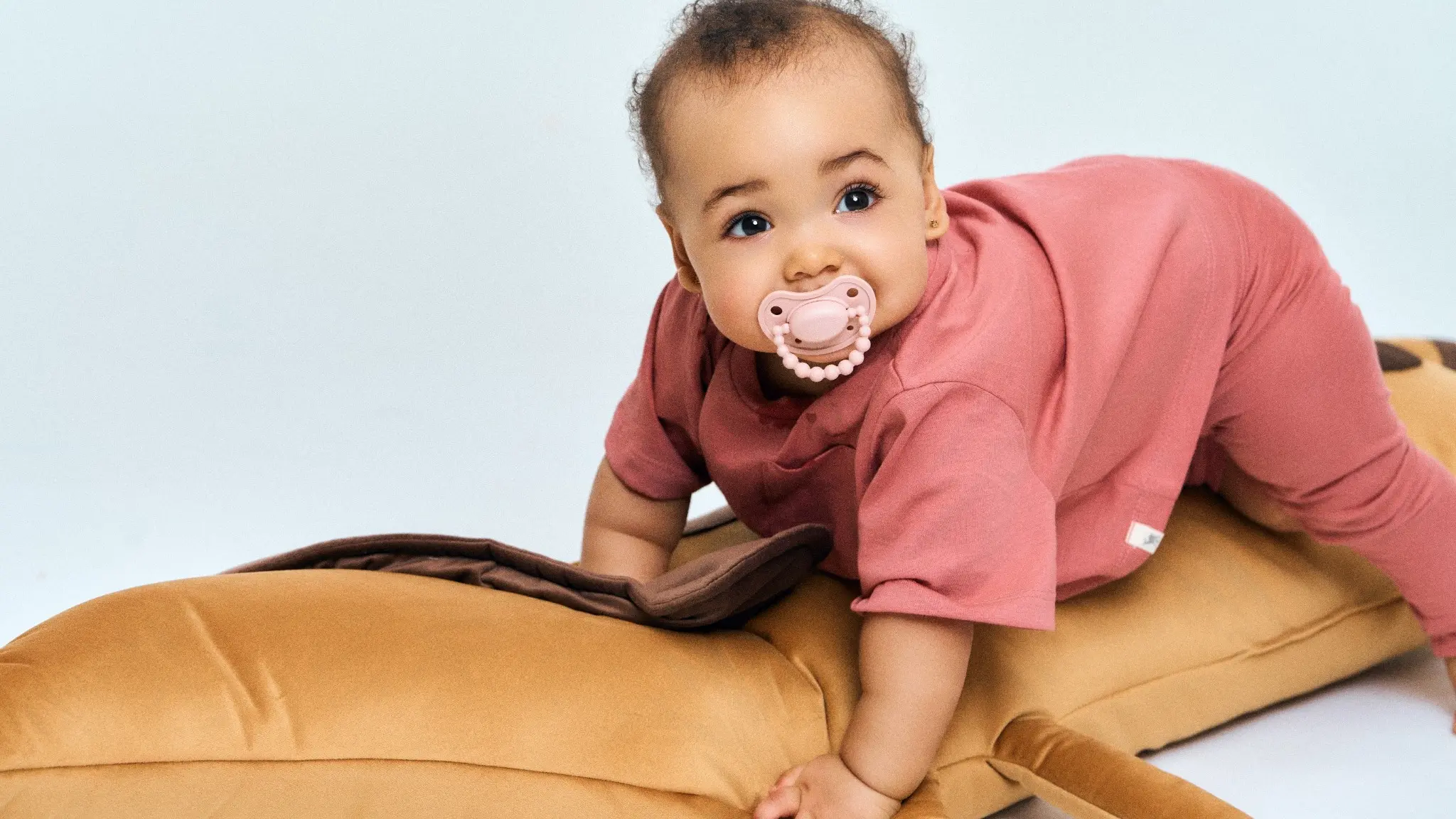
If your baby won’t take a dummy (or suddenly spits it out), it is often not a problem to “fix”. Some babies simply do not like dummies, and they should not be forced. A repeated refusal is a clear signal that, right now, your baby does not want that kind of comfort.
When parents search for help, it is usually because the refusal looks confusing: your baby is tired but rejects the dummy, or they used to settle with it and now turn away. The aim of this guide is to help you check a few likely explanations calmly, without turning dummy time into a struggle.
Start here: a quick, gentle checklist
Most dummy refusal fits into one (or more) of these buckets:
- Your baby does not want non-nutritive sucking right now (they are hungry, overstimulated, or want a different type of comfort).
- Timing is off (too early in the feed cycle, or the dummy is offered when they are already upset).
- Something feels “wrong” in the mouth (texture, temperature, gag reflex, or a temporary sore mouth).
- Fit and shape are not a match for your baby’s mouth and sucking pattern.
- Development has shifted (a new skill, teething phase, or changing sleep needs).
Practical insight: Many parents accidentally test a dummy only when baby is already crying hard. At that point the priority is usually milk or regulation (being held, movement, quiet). You will get a clearer “yes or no” if you offer it when baby is calm and drowsy rather than escalated.
Nutritive vs non-nutritive sucking: what your baby is asking for
Babies suck for two different reasons:
- Nutritive sucking is for feeding (milk transfer). The rhythm is deeper and more organised.
- Non-nutritive sucking is for comfort and regulation. It is usually lighter, faster, and often happens when a baby is sleepy.
Dummy refusal can simply mean your baby is in “feeding mode” rather than “comfort sucking mode”. Common clues that it is hunger rather than comfort include rooting, turning their head with an open mouth, sucking hands with intensity, or getting frustrated when held in a feeding position without milk.
If your baby is hungry, a dummy can feel like the wrong answer to the right question. Offering milk first (breast or bottle), then a dummy after the feed if your baby still wants to suck, is often a calmer approach.
If your baby refused a dummy from the outset
Some babies never accept a dummy, even when parents do everything “right”. That can be completely normal. Temperament, sensory preference, and how strongly a baby seeks non-nutritive sucking vary a lot.
Possible reasons (without assuming anything is wrong)
- They prefer a breast or bottle teat because it is warmer, softer, and (for feeding) rewarding.
- The latch feels unfamiliar. Breastfeeding uses a wide latch and coordinated tongue movement; some dummies encourage a shallower hold that certain babies dislike.
- The first tries were uncomfortable (too far in, wrong angle, offered when baby was already upset).
- Sensory dislike (silicone feel, taste after sterilising, or a preference for a different texture).
What you can do (briefly and gently)
- Try offering the dummy when your baby is calm, fed, and sleepy, not when crying.
- Hold your baby close and support them to settle first (rocking, swaying, quiet voice), then offer.
- If you are breastfeeding, consider waiting until feeding is established if you are worried about latch disruption. If you are unsure, a midwife, health visitor, or lactation consultant can advise for your situation.
Practical insight: Set a limit before you start (for example, 2-3 gentle offers over a day or two). Endless attempts can quickly turn a neutral object into something your baby associates with pressure.
If your baby suddenly stopped taking a dummy
A “dummy strike” is common. If your baby used to accept it and now refuses, think about what changed in the last few days or weeks rather than assuming you need a brand-new routine.
Common, non-diagnostic explanations
- Teething pressure. Some babies want to bite and rub gums rather than suck. Others are more sensitive and do not want anything touching sore areas.
- Blocked nose or mild illness. If breathing feels harder, a baby may reject anything that changes their mouth posture. Sore mouths can also make sucking uncomfortable.
- More awareness and distraction. Around the mid-infancy months, many babies become more alert and opinionated. They may drop the dummy because they want to look around, roll, crawl, or play.
- Changes in feeding. Growth spurts, a change in milk flow (such as a strong let-down), or a change of bottle teat can alter how your baby uses their mouth.
A quick check before you troubleshoot
- Inspect the dummy for stickiness, damage, or a change in texture.
- Consider whether you recently changed sterilising method, detergent, or storage (some babies react to residual taste or smell).
- Keep an eye on feeding overall. If dummy refusal comes with new feeding difficulty, persistent distress, or worries about growth, move to the “when to get help” section.
If your baby is teething and seems to want pressure on the gums, a dedicated teether may suit that moment better than a dummy. LUU Kids teethers are designed for that chewing stage, so you can offer a safe alternative when sucking is not what your baby is seeking.
If your baby gags, coughs, or retches on the dummy
Gagging can happen if the dummy reaches too far back, if the shape encourages a shallow latch, or if your baby is sensitive at the back of the tongue (the gag reflex is protective and can be strong in some babies).
What to look for
- Immediate gagging on contact (the dummy might be too large, or being positioned too far into the mouth).
- Gagging when the dummy shifts (it may not be stable in the mouth, leading to repeated triggering).
- Retching plus distress (stop the attempt; try again another day or not at all).
Gentle approach
- Let your baby draw it in themselves. Avoid pushing the dummy deeper to “help”.
- Try a calmer moment when your baby is drowsy and already doing small comfort sucks.
- Consider whether a different nipple construction could suit their mouth better. Some designs aim to leave more room for the tongue and encourage a more natural resting posture. LUU Kids positioning pacifiers are built around that idea, which some babies find easier to organise in the mouth than a long, bulb-shaped teat.
This article is about behaviour and observation, not diagnosis. If gagging also happens during feeds, or you are concerned about how your baby coordinates sucking and breathing, ask a suitable health professional for individual advice.
If your baby cannot keep a seal (it falls out repeatedly)
Repeatedly losing the dummy can look like refusal, but sometimes it is more about mechanics: your baby cannot maintain a comfortable lip seal with that specific size or shape, or they are not in a state where they want to suck strongly enough to hold it.
What to check
- State: a very sleepy baby may relax their mouth and drop it; an overstimulated baby may keep moving and dislodging it.
- Position: some babies keep a seal more easily when held close with head and neck supported, rather than lying flat while alert.
- Fit: if the shield sits awkwardly, or the teat seems too long/too short for your baby’s mouth, it may not stay in comfortably.
Practical insight: Parents often mistake “falls out” for “needs holding in”. Holding a dummy in place can create a tug-of-war and can be unsafe if it becomes a pattern during sleep. A better test is to offer it, then let your baby do the work. If they cannot keep it in, that is useful information: it is not a good match right now.
If your baby chews rather than sucks
Chewing is common as babies explore textures and, later, as teeth come through. Chewing does not mean your baby is being difficult; it may mean they are seeking a different sensation than sucking provides.
What it might mean
- Teething or gum pressure: chewing can soothe.
- Developmental exploration: older babies use their mouths to learn about the world.
- Ready for a different tool: a teether is often a better match than a dummy during chewing phases.
If your baby mainly chews the dummy, check it regularly for wear and replace according to the manufacturer’s guidance. Consider offering a teether during awake time, while keeping dummy use (if you use it) for calm, sleepy moments.
Shape and fit: what to look for (and when to use a size guide)
Different dummies ask the mouth to work in different ways. Some babies tolerate almost any shape. Others are highly specific.
Below is a simple comparison to help you understand what parents usually mean by “cherry” versus “orthodontic/positioning” styles. This is not about one being universally better; it is about matching your baby’s mouth and preference.
| What you notice | A common explanation | What to try |
|---|---|---|
| Baby gags or retches quickly | Teat feels too long or sits too far back; sensitive gag reflex | Offer without pushing in; consider a smaller or differently shaped nipple |
| Baby cannot keep it in | Seal is hard to maintain; shape does not sit stably for their suck pattern | Try a different shape or size; offer when calm and drowsy |
| Baby chews instead of sucking | Seeking pressure or sensory input more than comfort sucking | Offer a teether while awake; reserve dummy for sleep cues if desired |
| Baby accepts briefly then spits out | Timing mismatch, overstimulation, or they were actually hungry | Feed first; offer after the feed during winding down |
If you suspect fit is the issue, use a size check rather than guessing. LUU Kids offers age-based options (0-3m, 3-6m, 6m+) because mouth size and sucking strength change quickly in the first year. A fit check is also the moment to swap sizes if your baby seems between stages. (This behavioural guide is separate from any sizing guidance, but fit is one of the few areas where a size guide can genuinely help.)
How to offer a dummy without stress (and when to stop trying)
If you want to try a dummy again, keep it simple. You are not trying to “train” your baby to accept it; you are offering an option.
Gentle ways to offer
- Pick a calm moment: after a feed, during a cuddle, when eyelids are heavy.
- Let your baby lead: touch the dummy to their lips and wait for them to draw it in. If they turn away, accept the answer.
- Keep the environment low-stimulation: dim light, quiet voice, minimal handling.
- Try a short reset: if baby spits it out, pause. Soothe first, then offer once more. Repeated rapid offers can escalate frustration.
- Keep attempts time-limited: decide in advance when you will stop (for example after 30-60 seconds, or after two refusals).
When to stop trying (for now)
- Your baby repeatedly pushes it out, cries, or arches away.
- There is frequent gagging or coughing during attempts.
- Dummy time is becoming a daily battle.
UK safer sleep advice recognises that a dummy can be used for sleep, but a baby who repeatedly refuses a dummy does not need to be made to use one. If your baby settles without it, that is also a valid and safe outcome.
If you do decide to try another shape, focus on function: look for a design that feels stable in the mouth and allows the tongue space to rest naturally. LUU positioning pacifiers are designed around tongue room and oral mechanics, so for some babies they can feel more intuitive than longer, bulb-style teats. For others, no dummy will be welcome, and that is fine.
When to speak to a health professional
Dummy refusal alone is usually not a medical issue. But get individual advice from an appropriate professional (such as your midwife, health visitor, GP, or a feeding/lactation specialist) if you notice any of the following:
- Feeding difficulties: clicking, frequent coughing/choking during feeds, poor milk transfer, or feeds becoming consistently stressful.
- Signs of pain: persistent crying with feeding or sucking, pulling at ears, or a sore mouth you are worried about.
- Concerns about growth: fewer wet nappies, poor weight gain, or your baby seems unusually sleepy or unsettled.
- Ongoing breathing difficulties, especially with feeds or sleep.
This guide can help you organise what you are seeing, but it cannot tell you what is happening for your baby specifically.
FAQ
Is it normal for a baby to completely refuse a dummy?
Yes. Some babies never take a dummy, and there is no need to force it. If your baby settles in other ways and feeds well, refusal is often simply preference.
Why won’t my baby take a dummy but will suck a finger?
Fingers are warm, always available, and familiar. Many babies find their own hands easier to control than a dummy, especially during lighter comfort sucking.
Can a dummy cause nipple confusion in breastfed babies?
Some breastfed babies are sensitive to different sucking patterns, but many use dummies without issues. If you are concerned, wait until breastfeeding feels established and keep dummy use calm and occasional, rather than frequent replacement for feeds.
How do I know if the dummy shape is making my baby gag?
If gagging happens immediately on contact or repeatedly when the dummy shifts, shape or fit may be a factor. Do not push the dummy further in; consider trying a different size or construction and re-test only when baby is calm.
Should I keep trying if my baby spits the dummy out?
Try once or twice in a calm moment, then stop. If your baby repeatedly spits it out, take that as a clear “no” and use other soothing options instead.
My baby used to take a dummy and now refuses. Should I replace it?
Sometimes, yes. Check for wear, stickiness, changes in smell/taste after sterilising, and whether your baby has moved into a new size range. If refusal continues, it may simply be a developmental change.
If you want to explore dummy shapes designed with oral mechanics in mind, you can find LUU Kids positioning pacifiers and other development-focused products on the official website: shop LUU Kids pacifiers and baby essentials.