Same Dummy, Different Colour? Understanding Models, Sizes and Product Variants
October 14, 2026
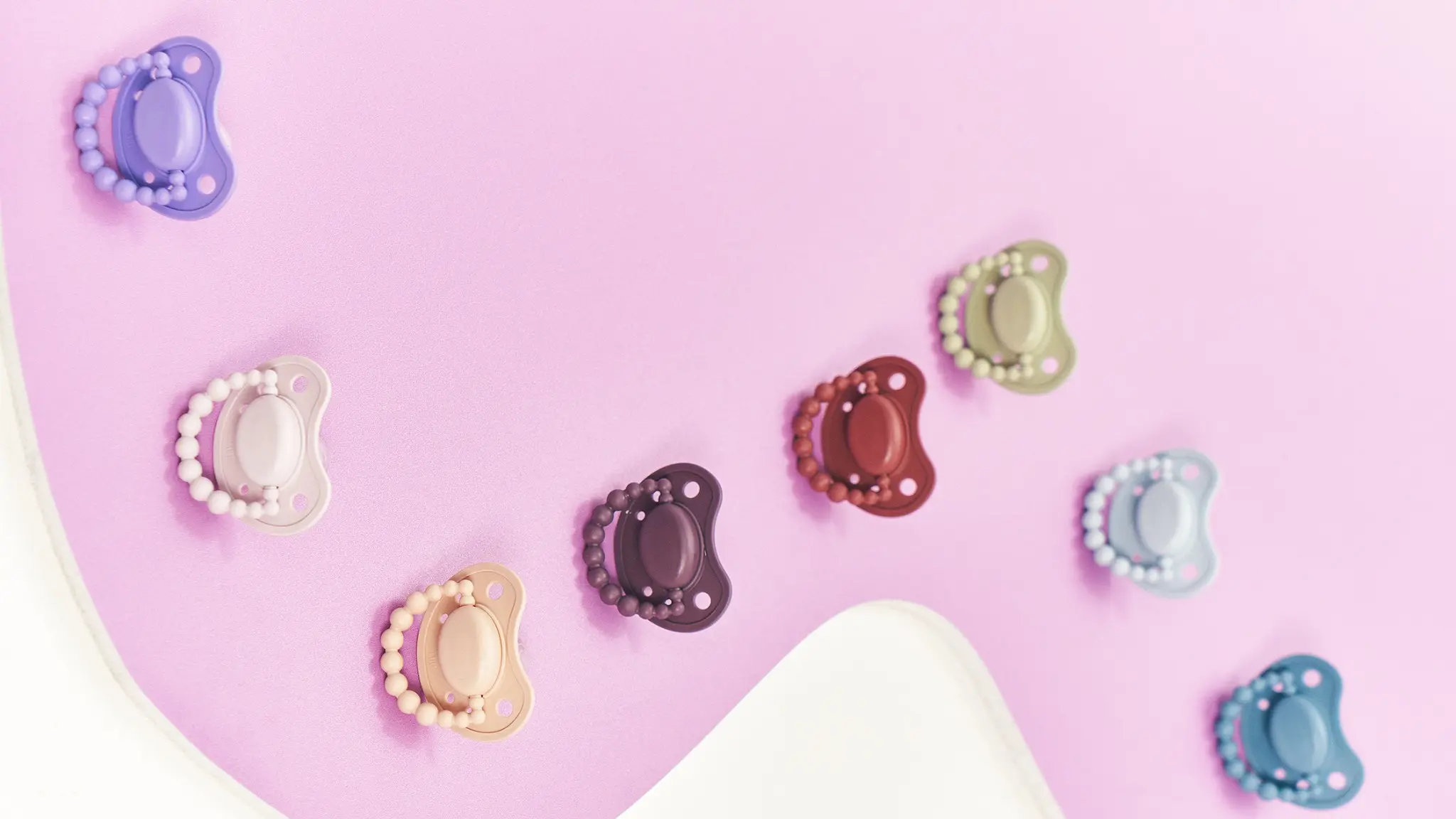
Different colours do not necessarily mean a different dummy design. But you should not assume two dummies are identical just because they look similar (or share the same brand name). The safest approach is to check the exact product information - especially the age stage and model name - before you reorder.
This guide is for parents who want to buy “the same dummy again” and keep stumbling over colours, collections and multipacks. We will separate what affects how a dummy fits and functions (the things worth checking) from what mainly changes how it looks or how it is sold.
Quick answer: what to check before you assume it is the same
If you are looking at the “same” dummy in a different colour, start by checking these details in the product listing or on the packaging:
- Age stage / size (for example, 0-3m, 3-6m, 6m+)
- Product range / model name (brands often sell more than one construction)
- Teat material and any key construction notes mentioned by the manufacturer
- Pack format (single dummy vs confirmed twin pack)
- Any stated special feature (for example, glow-in-the-dark)
Practical insight: When you are tired, it is easy to reorder by recognising a picture rather than reading the fine print. If you want a true like-for-like replacement, use the product title and age stage as your “must match” details, then treat colour and collection as optional.
Brand, range, model, age stage, colour and pack format: what each term means
Online shops often mix these terms together, which is why parents end up wondering if a new colour means a new dummy. Here is the clean way to think about it:
- Brand - who makes it (for example, LUU Kids). A brand can sell multiple dummy constructions and sizes.
- Product range - a family of products that share a core concept (for example, LUU Positioning Pacifiers). A range can still include different sizes and variants.
- Functional model - the actual design that affects fit and use: teat shape, teat size, shield size/shape, and any defined functional feature (for example, glow).
- Manufacturer age stage - the size category intended for a baby’s stage (for example, 0-3m, 3-6m, 6m+). This is often the biggest difference between two listings that “look the same”.
- Colour name / collection name - usually describes appearance or a themed release. It may be identical in function to another colour, but you should confirm via the product details rather than assume.
- Pack format - how it is sold (single unit or a twin pack). Pack format changes convenience and cost, not the physical design of each dummy.
Which differences can matter (and which are mostly cosmetic)
Parents usually care about three outcomes: fit, comfort/acceptance, and replacing a familiar item without surprises. These are the types of differences most likely to affect that decision.
Differences that can affect fit and function
- Age stage (size): a bigger baby typically needs a different teat and shield size than a newborn.
- Teat shape and construction: “orthodontic” or positioning-style designs are built differently from a round, cherry-style teat.
- Shield size/shape: can change how it sits against cheeks and under the nose.
- Any explicit functional feature: for example, a glow-in-the-dark version is a real feature change even if the overall dummy model is the same family.
Differences that are often cosmetic or “packaging-level”
- Colour (for example, cream vs sage): colour alone usually does not change how the dummy fits.
- Collection/collaboration name: often a design theme. It might not change the teat, but you should still verify the size and model in the listing.
- Single vs twin pack: changes how many you receive. It does not automatically mean a different dummy model, but always check the individual dummy details.
Practical insight: If a listing headline highlights a colour or collection name more than the age stage, slow down and look for the size label. Many “wrong dummy” orders happen because parents assume the colour label is the product identifier.
Dummy sizes by age: why size is a “model” difference in practice
Yes, dummies have sizes, and it is more than a marketing label. Your baby’s mouth is changing quickly: the jaw is growing, the cheeks and lips get stronger, and the space in the mouth changes as feeding patterns develop. A dummy that fitted well a few months ago can start to feel too small or sit differently.
Many brands (including LUU Kids) group sizing by age stage. In the LUU positioning pacifier range, this is typically shown as 0-3m, 3-6m and 6m+. That age stage is a core identifier, not a decorative variant.
Common signs a dummy may be the wrong size
Not every baby follows the same timeline, so use the age stage as a guide and look at fit.
- The shield leaves red marks on cheeks or around the mouth after short use.
- Your baby struggles to keep it in, and it drops out easily even when they are calm.
- They seem frustrated: repeated pulling out, chewing the shield, or refusing a dummy they previously accepted (after illness and teething are ruled out).
- The teat looks small in proportion to your baby’s mouth compared with earlier weeks.
- You have reached the next age stage and everything else is changing too (feeding, sleep, hand-to-mouth play).
If you are unsure, use your baby’s current age stage as your starting point, then confirm the exact size on the product you are reordering. If your baby was settled on one size and suddenly rejects a replacement, a size mismatch is one of the first things to check.
Orthodontic-style vs cherry-style: the simple mechanics
Parents often hear “orthodontic dummy” and understandably ask what that actually means in the mouth.
A baby’s tongue plays a big role in how sucking works. During sucking, the tongue lifts and presses towards the roof of the mouth (the palate) while the jaw moves rhythmically. A dummy’s teat shape influences where the tongue has room to sit and how pressure is distributed.
- Round (cherry-style) teats are more bulb-like. In some babies, that bulk can encourage the tongue to sit lower to make space, and it can concentrate pressure in a different way against the palate.
- Orthodontic-style or positioning-style teats are typically shaped to sit flatter in the mouth, with the aim of working with the tongue’s natural movement and leaving more usable space in the oral cavity.
This does not mean one shape is “perfect” for every child, and it is not a guarantee of any outcome. The practical takeaway is that teat construction is a genuine model difference. So if you are switching colours or collections, confirm you are still buying the same type of teat and the same age stage.
If you want a deeper dive into how construction choices like a thinner neck or a lightweight shield affect day-to-day use, read the LUU Kids article on that topic before you buy a replacement.
LUU Kids examples: how to identify a LUU dummy before choosing a colour
LUU Kids focuses on positioning pacifiers as its flagship product category. Within that category, the most reliable way to identify the right version is:
- Confirm the category: LUU Positioning Pacifiers (not a different baby product such as teethers or spoons).
- Confirm the age stage: 0-3m, 3-6m or 6m+.
- Check for a named functional feature if relevant (for example, a glow-in-the-dark variant such as American Cream Glow).
- Only then choose the colour or collection name you like.
This order matters because it reduces the chance you accidentally change the “real” product while you are trying to change only the look.
Practical insight: If your baby accepts a particular dummy, treat it like you would a bottle teat size. When ordering a second one for nursery or the changing bag, match the age stage first. Colour is the easy part to vary later.
Worked example: reordering a familiar dummy in a new colour
Scenario: You have a LUU positioning pacifier your baby likes. You spot a new colour online and want the same dummy, just a different look.
- Step 1: Match the age stage. If your current dummy is 3-6m, make sure the new colour listing is also clearly labelled 3-6m.
- Step 2: Match the range/model name. Stay within the same LUU Positioning Pacifiers range. Do not assume “LUU dummy” automatically means the same construction.
- Step 3: Check for any stated feature change. If the new colour is described as glow-in-the-dark, that is a feature difference (useful, but still a difference).
- Step 4: Check pack format. Decide whether you are buying a single dummy or a twin pack. This affects convenience, especially for childcare handovers and washing routines.
- Step 5: Then pick the colour/collection. If everything above matches, you are far more likely to get the like-for-like product you intended.
If anything is unclear in the listing, do not guess. Use the exact name and age stage shown on your current packaging as your reference point.
Replacement timing and pack formats (single vs twin packs)
Even when you buy the same model and size, a “new” dummy can feel different simply because it has not been used yet. Over time, materials can show wear: they may become cloudy, sticky, or lose their original firmness.
LUU Kids commonly suggests replacing dummies around every 4-6 weeks, depending on use and condition. Rather than focusing on the calendar alone, also check the dummy regularly and replace it if you see damage or changes in texture.
For parents who like a practical system (one in use, one clean as a backup), LUU Pacifier Twin Packs can make that easier, as long as the pack clearly states the same age stage and model you want.
For a safety-focused checklist of what to verify on listings and packaging (especially when buying online), use the LUU Kids online safety guide rather than relying on product photos alone.
If you are ready to choose or reorder a LUU positioning pacifier, you can browse the current range on LUU Kids and double-check the age stage, model and pack format before you place the order.
FAQ
Does a new colour mean a new dummy model?
Not necessarily. Colour is often just an appearance change. Still, always verify the age stage and model/range name in the product details before you assume it is the same dummy.
Does a collection name mean the teat is different?
Not by default. Collection names commonly refer to the design theme. Treat it as “presentation” unless the listing explicitly states a construction or feature difference, and confirm the same age stage.
What should I verify before buying a replacement of a dummy my baby already likes?
Match the age stage/size first, then confirm the model or range, check for any stated functional feature (such as glow), and confirm whether it is a single dummy or a twin pack. Only then choose colour or collection.