Can My Baby Sleep with a Dummy? What to Do If It Falls Out at Night
September 23, 2026

If you are doing the 2am "dummy hunt" in the dark, you are not alone. Many babies love settling with a dummy, then wake cross because it has fallen out.
Quick answers: Yes, most babies can sleep with a dummy if it is used safely and offered when you put them down. If it falls out after your baby is asleep, you usually do not need to put it back. If your baby wakes and seems to need it, you can choose to replace it, but repeated replacing can become a sleep association over time.
This guide is based on UK safer sleep guidance, with practical advice for both nights and naps.
Is it safe for a baby to sleep with a dummy?
For many babies, it is fine to offer a dummy when putting them down to sleep, as part of safer sleep. UK guidance from The Lullaby Trust notes that using a dummy for sleep is associated with a lower risk of SIDS, but it is not a guarantee and it does not replace other safer sleep steps (such as sleeping baby on their back and keeping the sleep space clear).
Focus on using a dummy safely: the right size for your baby, in good condition, and never attached to anything while they sleep. If your baby refuses the dummy, you do not need to force it.
Primary UK source: The Lullaby Trust guidance on dummies and safer sleep.
Personal insight: The biggest worry we see from parents is "Will something bad happen if it drops out?" In most cases, if it falls out once your baby is asleep, that is simply normal and not an emergency. Your goal is safe sleep first, then a plan that helps everyone get back to sleep with the least disruption.
Nighttime dummy safety rules (UK checklist)
- Never attach a dummy to a cord, ribbon, string, chain or clip for sleep (including to clothing or the cot). This is a strangulation risk.
- Keep the cot clear: no loose bedding, pillows or toys around your baby while sleeping, in line with safer sleep guidance.
- Use an age-appropriate dummy so it fits your baby’s mouth well and is comfortable (for example, newborn-sized in the early weeks, then move up as your baby grows).
- Check the dummy every day for damage (tears, thinning, stickiness, loose parts) and replace if worn.
- Do not coat the dummy in anything sweet (such as honey, jam or sugar).
- If your baby is unwell or has breathing difficulties, follow your health visitor, midwife or GP advice about soothing and sleep.
Offering a dummy vs repeatedly replacing it
It helps to separate two different situations:
| Situation | What it means in real life | Usually a sensible approach |
|---|---|---|
| Offering a dummy when settling | You give the dummy as you put your baby down, and they drift off with it. | Fine for many families. If it falls out after your baby is asleep, you do not need to replace it. |
| Repeatedly replacing it during sleep | Your baby wakes at each sleep cycle and needs you to put the dummy back in to resettle. | Consider a gentle plan so your baby can resettle with less help (pause-and-wait, soothing first, or gradually reducing replacements). |
A dummy can be a helpful comfort, but if it becomes the only way your baby can return to sleep, nights can quickly turn into lots of brief wake-ups for everyone.
Why babies wake when the dummy falls out
Babies naturally move through lighter and deeper sleep. As they come into lighter sleep, they may stir, wriggle, or briefly wake. If they fell asleep sucking a dummy, the feeling of it being gone can be enough to fully wake them.
This does not mean you have done anything wrong. It simply means your baby has learned a link between sucking and falling asleep. Some babies grow out of needing you to replace it; others keep signalling for help.
What to do if the dummy falls out at night (step-by-step)
1) If your baby is still asleep, leave it
If the dummy drops out and your baby stays settled, do nothing. Re-inserting it can accidentally wake them.
2) If your baby stirs, pause before rushing in
Give them a moment. Many babies grumble, shuffle, or whimper between sleep cycles and then drift back off.
Personal insight: A simple timing trick can save a lot of wake-ups: if your baby is safe and you can hear they are not escalating, count slowly to 20-30 before you move. That tiny pause often prevents you becoming the "replacement service" every 45 minutes.
3) If they wake and are upset, try the least stimulating help first
Keep the room dark and calm. Try, in order:
- Quiet shushing or steady patting in the cot.
- A gentle hand on their chest (if that usually calms them).
- If they are still upset, offer the dummy again.
Aim to avoid turning on bright lights, chatting, or picking up for long periods unless you need to. The goal is "back to sleep", not "fully awake and entertained".
4) If you choose to replace the dummy, do it calmly and consistently
If replacing the dummy settles your baby quickly, it is a valid tool. The key is being intentional: if you replace it ten times a night for weeks, your baby may come to expect it every time they surface into light sleep.
5) If replacements are constant, decide on a plan for the next few nights
If you are replacing the dummy again and again, pick one small change and stick with it for several nights:
- Pause longer before you go in (for example, 30-60 seconds if safe to do so).
- Soothe first, dummy second (so the dummy is not always the first response).
- Replace once, then switch to soothing if they drop it again immediately.
Small, predictable changes tend to work better than suddenly removing the dummy when everyone is exhausted.
What about naps?
The same logic applies in the daytime. Offer the dummy when settling for a nap if it helps. If it falls out and your baby stays asleep, leave it.
Naps are often lighter than night sleep, so some babies wake more easily when the dummy drops. If naps have become very short because of dummy wake-ups, it can help to practise your "pause and soothe" plan during one nap a day, when you have a bit more patience than at 3am.
The middle-of-the-night dummy hunt: make it easier
When you are sleep-deprived, anything that reduces fuss and time awake matters. A few practical ideas:
- Keep a spare dummy on your bedside table so you are not searching the floor half-asleep.
- Consider a glow-in-the-dark dummy so you can spot it in the cot without turning on a bright light. LUU Kids offers glow variants within its positioning pacifier collections, which some parents find useful for quick, low-stimulation resettles.
- Use more than one dummy at bedtime only if it is safe and appropriate for your baby (for example, placing a spare within reach in the cot once your baby is old enough to move and reposition it safely). Always follow safer sleep guidance and keep the sleep space clear for younger babies.
Personal insight: If you are going to keep spares, keep them predictable: one in the cot area (when appropriate) and one on the bedside table. The biggest time-waster at night is not the dummy falling out, it is the frantic, noisy search that wakes your baby even more.
Choosing a dummy for sleep: fit, comfort and oral development
For sleep, the best dummy is the one that is safe, age-appropriate, and comfortable enough that your baby is not constantly spitting it out. From an oral development point of view, parents often look for designs that are mindful of tongue space and resting posture.
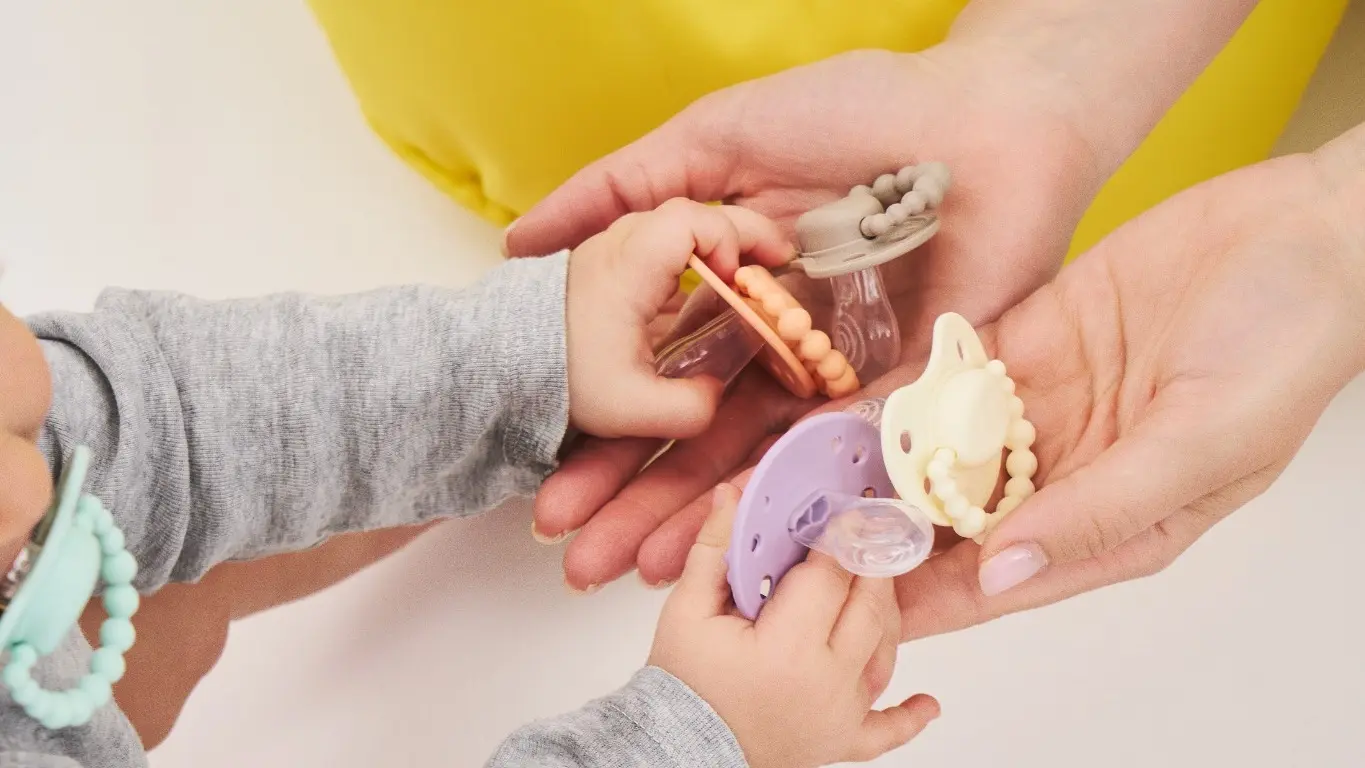
LUU Kids focuses on positioning pacifiers with a distinctive nipple construction designed to give the tongue more space in the oral cavity and support its proper positioning. If you are choosing a dummy for a newborn, a lighter, smaller dummy (such as an age 0-3m option) can be easier for early sucking and less likely to fall out purely due to weight.
If you are unsure about sizing, treat age ranges as a starting point and also watch your baby: frequent dropping, fussing, or difficulty holding the dummy can be signs it is not the right fit for their current stage.
How to gently reduce the "dummy = sleep" association
You do not need to "train" a tiny baby. But if constant dummy replacement is draining you, a gentle reduction plan can help.
Option A: Keep the dummy for falling asleep, but not for every resettle
- Offer the dummy at the start of the night as usual.
- At the first wake, try soothing first (hand on chest, shush-pat) before offering the dummy.
- If they escalate, offer the dummy, then put it down again when they are calm.
Option B: Gradually increase your pause time
- Night 1-2: pause 20-30 seconds before you intervene.
- Night 3-4: pause 45-60 seconds.
- Keep extending gently if it helps.
This supports self-settling without leaving your baby to cry for long periods.
Option C: For older babies, teach "find and replace" (only when developmentally appropriate)
Once your baby has the coordination to pick up and bring objects to their mouth, you can help them practise in the daytime by offering the dummy within reach and guiding their hand. At night, this can reduce how often you need to intervene. Always keep the sleep space aligned with safer sleep guidance for your baby’s age.
When to get extra support
If your baby has persistent sleep difficulties, feeding concerns, reflux symptoms, or you are worried about breathing, talk to your health visitor, midwife or GP. Individual advice matters.
If you would like to explore age-appropriate positioning pacifiers designed with oral development in mind, you can view the LUU Kids range on the official website: shop LUU Kids pacifiers and baby essentials.
FAQ
Should I put the dummy back in if my baby is asleep?
No. If your baby is asleep, it is usually best to leave it out. Replacing it can wake them.
Can a newborn sleep with a dummy?
Often, yes. Offer it when settling them to sleep if they take it. If you are breastfeeding, some parents prefer to wait until feeding is well established. If in doubt, ask a midwife or health visitor.
What do I do if my baby wakes every time the dummy falls out?
Try a short pause first, then calm soothing in the cot before you replace it. If you are replacing it repeatedly, choose a gentle plan (soothe first, or gradually increase your pause) and stick with it for a few nights.
Is it safe to use a dummy clip at night?
No. Do not attach a dummy to anything with a cord, ribbon, chain or clip while your baby is sleeping due to strangulation risk.
Does using a dummy prevent SIDS?
No. It may be associated with a lower risk, but it does not guarantee protection. Follow full safer sleep guidance (back to sleep, clear cot, smoke-free environment, and appropriate room temperature).